
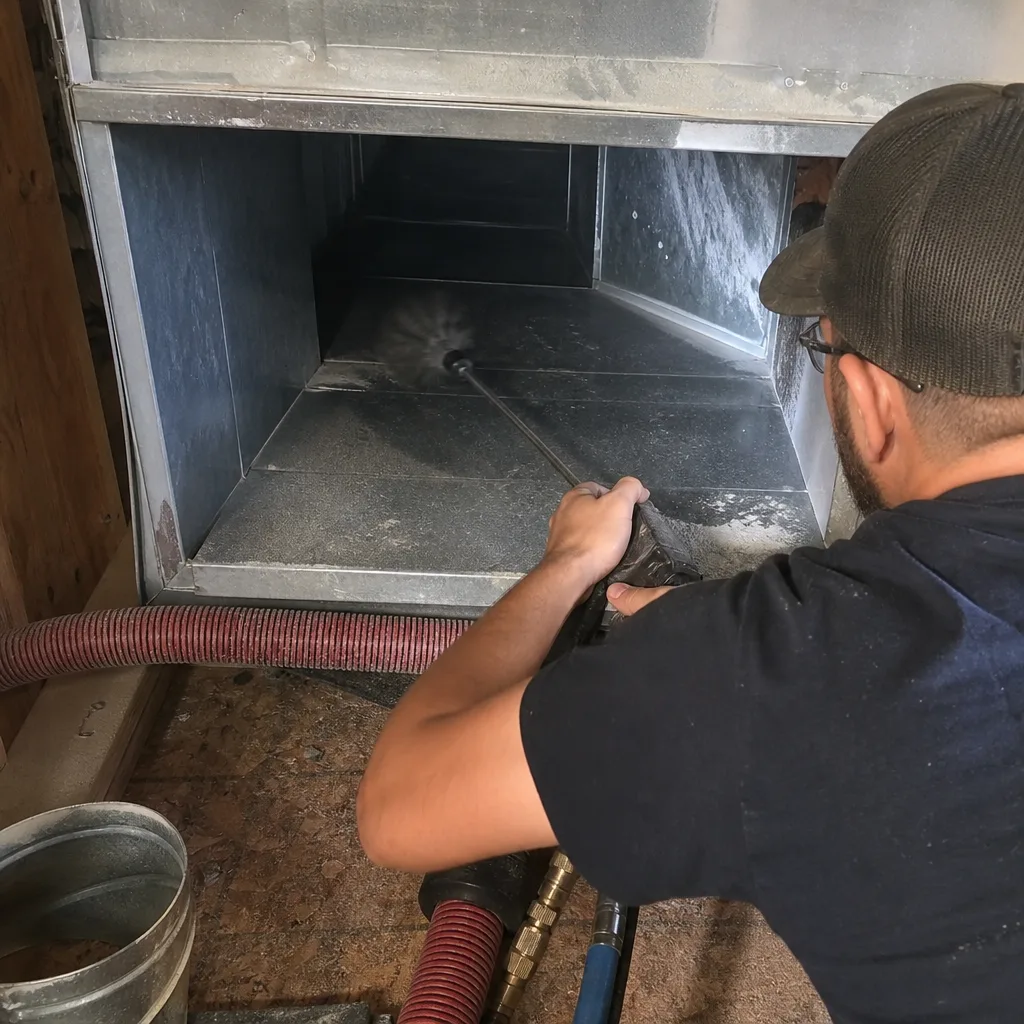
Last updated November 15, 2026
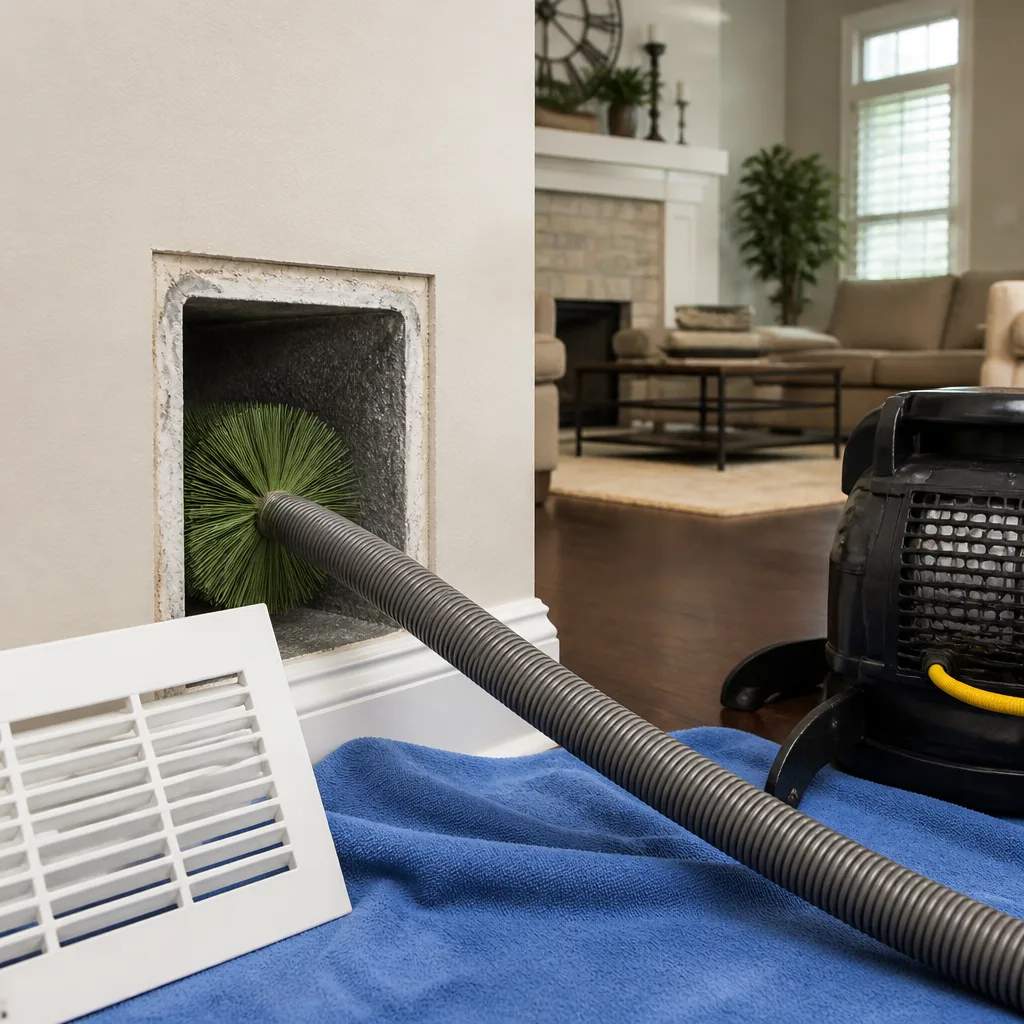 Whole-home duct cleaning
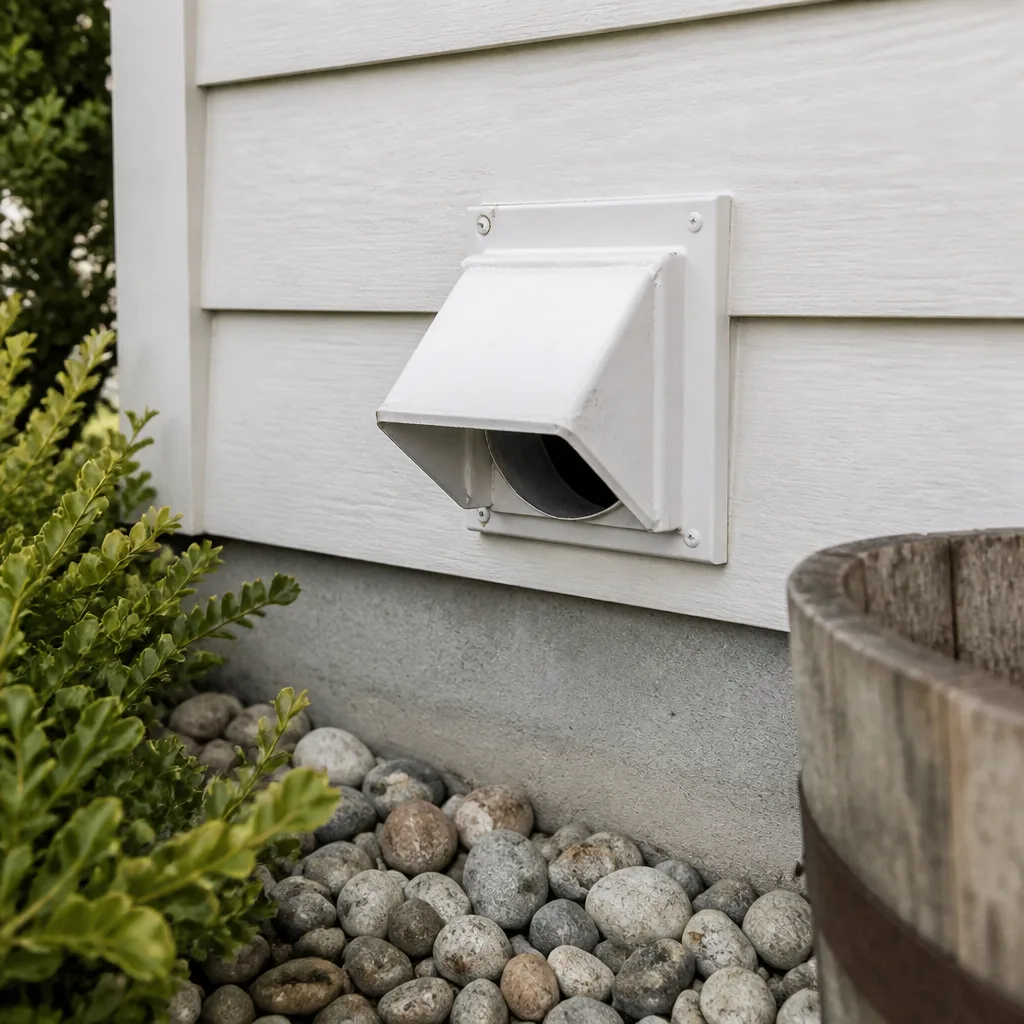 Dryer vent cleaning
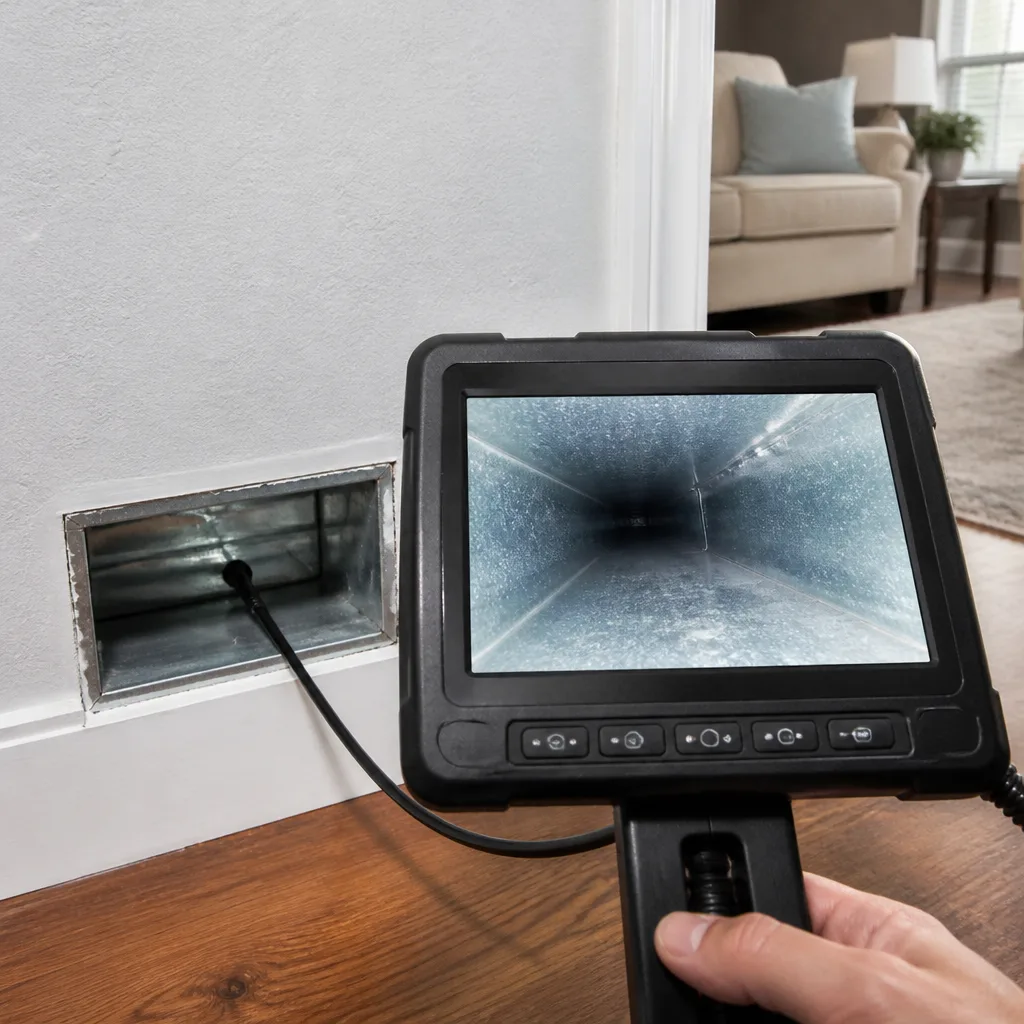 Camera inspection
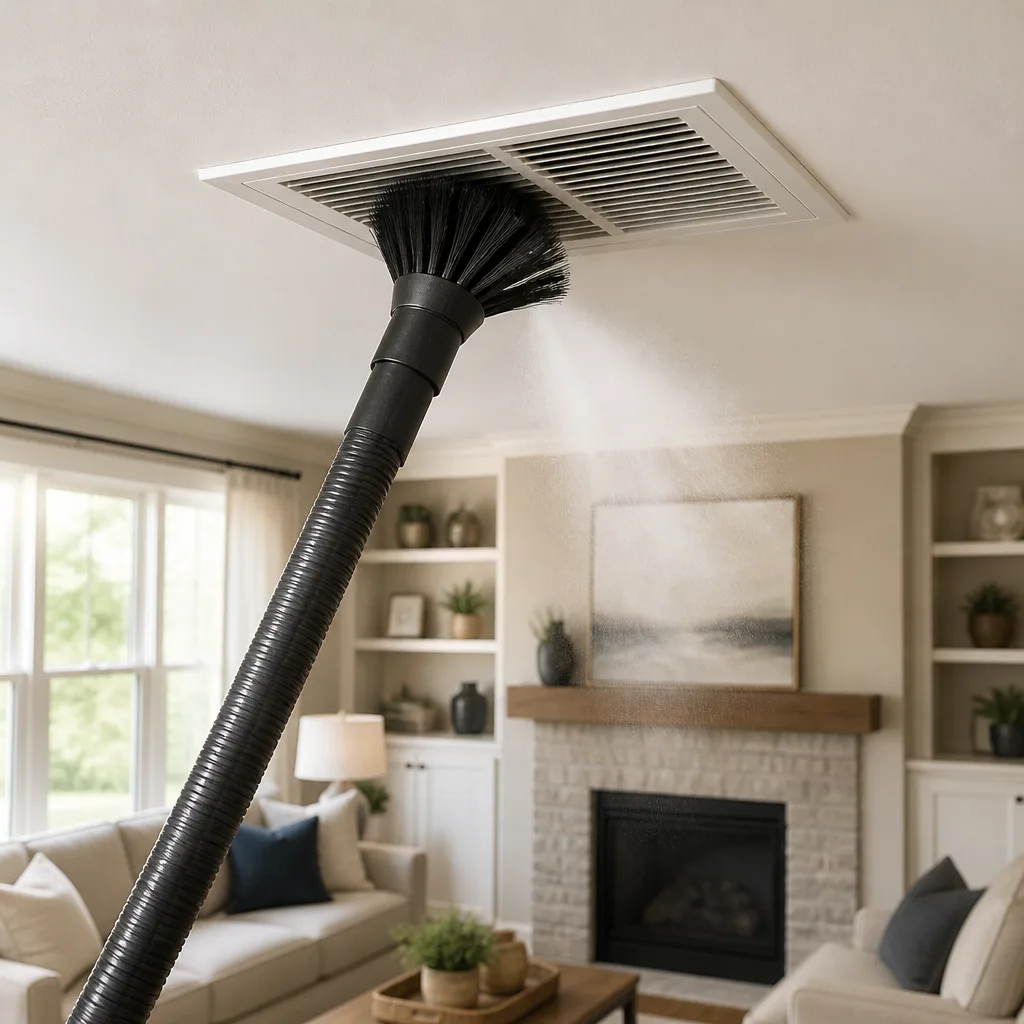 Sanitizing & deodorizing
Whole-system duct and dryer vent check with before-and-after photos - you see exactly what came out of your vents
That "$99 whole-house special" is a bait ad - the real number appears once they are in your hallway, or the "clean" is a shop-vac at the register. We photograph the inside of your ducts before and after instead.
The Complete Guide to Air Duct Cleaning in Lehigh Acres
Most duct cleaning guides are written for climates where ducts dry out between uses. In Lehigh Acres, where ambient humidity rarely drops below 60%, your ductwork never fully dries, and the biology inside it reflects that. That single fact changes what contamination looks like, why it forms, and what a real cleaning has to accomplish. Generic advice about “dust and debris” misses the moisture-driven film, the dust mite activity, and the sandy infiltration that Southwest Florida homes actually deal with. This guide walks through the full system, component by component, so you can judge for yourself whether a cleaning was done properly. We’ll cover what accumulates in Lehigh Acres ducts, how professional-grade equipment differs from a shop-vac setup, and how to verify the work with your own eyes.
Quick Answer
Air duct cleaning in Lehigh Acres means removing built-up dust, sand, moisture-driven biological growth, and construction debris from every part of the system: supply ducts, return ducts, the air handler coil, and the blower. Because Lehigh Acres humidity stays high year-round, ducts here never fully dry, so the job requires negative-pressure HEPA equipment that captures dislodged material instead of blowing it back into your living space. A proper cleaning restores airflow, reduces what you’re breathing, and addresses the dryer vent as a separate fire-safety component.
Styles & brands we work with
- Whole-home duct cleaning
- Dryer vent cleaning
- Camera inspection
- Sanitizing & deodorizing
Table of Contents
- Why Lehigh Acres Humidity Changes Everything
- What Actually Accumulates Inside Lehigh Acres Ducts
- Shop-Vac vs. Professional Equipment: The Real Difference
- Post-Construction Debris in Newer Lehigh Acres Homes
- Why Cleaning Only Part of the System Fails
- The Professional Cleaning Process, Step by Step
- How to Verify the Cleaning Was Actually Done
- Your Dryer Vent Is Part of the System
- When Cleaning Isn’t Enough: Duct Repair
Why Lehigh Acres Humidity Changes Everything
Duct cleaning advice written for dry climates assumes that whatever settles inside the ductwork eventually dries into loose dust that a vacuum can lift easily. Lehigh Acres doesn’t work that way. Ambient humidity outside frequently sits above 60%, and an air-conditioned home cycles that moist air through the return side constantly. The result is that dust doesn’t stay powdery. It combines with condensation on cold surfaces and forms a sticky film that clings to duct walls, flex-duct ridges, and the air handler coil.
That film is the foundation for biological growth. Dust mites thrive in it. Mold spores settle into it. And once that growth establishes itself on interior surfaces, ordinary airflow won’t clear it. Neither will a consumer vacuum. The moisture problem is structural to this climate, not a sign of neglect on the homeowner’s part.
A few things follow from that:
- Flex duct worsens the problem. The corrugated interior of flex duct gives moisture and dust far more surface to grip than smooth metal, and it’s everywhere in Lehigh Acres homes.
- Seasonal lulls don’t dry it out. The cooling system runs most of the year here, so ducts stay cold and condensation-prone with little recovery time.
- Smell is often the first signal. A musty or “gym bag” odor when the system starts is moisture-driven growth off-gassing, not just accumulated dust.
- Sandy soil infiltrates. Lehigh Acres sits on sandy ground, and fine sand riding on return air settles into the same damp film, making it heavier and harder to remove.
- Coils carry the same load. A damp, dust-coated evaporator coil loses capacity and drives up run times, which in turn keeps the whole system wetter.
In our experience working duct systems in this region, the gap between a “dusty” system in a dry climate and a “loaded” system in Lehigh Acres is enormous. The cleaning has to be designed for the wet problem, not the dry one. That’s why duct cleaning here starts with real agitation and serious negative pressure, not a quick pass with a brush.
What Actually Accumulates Inside Lehigh Acres Ducts
Homeowners picture dust bunnies when they picture duct interiors. The reality in Lehigh Acres is a layered mix, and knowing the layers helps you understand why a cleaning that addresses only one of them is incomplete.
- Loose particulate: skin cells, pet dander, fabric fibers, and cooking residue carried on return air.
- Sand and grit: fine soil particles that travel in on foot traffic and settle in the return plenum and duct runs.
- Moisture-adhered film: the sticky combination of dust and condensation that coats duct walls and flex ribs.
- Biological growth: mold and mildew colonization and dust mite populations living in the film.
- Construction debris: drywall dust, sawdust, insulation fibers, and drywall mud residue left behind during building or renovation.
Each layer calls for a different method. Loose particulate lifts with airflow and vacuum. The adhered film needs mechanical agitation to break its grip on the surface. Biological growth needs that film removed entirely, not just wiped. Construction debris needs a more aggressive approach because drywall dust sets up hard when it dries.
This is why equipment matters so much. If the tool can’t agitate the surface while containment holds the dislodged material, the film stays put and the job only looks done. When we plan a cleaning in Lehigh Acres, we map the system first: where the returns sit, how the flex runs, whether the air handler sits in a garage or closet, and how long since the last service. That map tells us which layers we’re dealing with.
Shop-Vac vs. Professional Equipment: The Real Difference
A shop-vac and a brush on a drill will not clean a duct system. This isn’t a marketing claim; it’s a matter of physics. Professional duct cleaning relies on two things working together: mechanical agitation that loosens contamination from surfaces, and high-volume negative pressure with HEPA filtration that pulls dislodged material out of the system and traps it. Consumer vacuums deliver neither at the scale a residential system requires.
Professional-grade systems built by Rotobrush and Nikro are the standard because they generate the air volume and agitation needed to clean a full residential system. These are the same class of tools specified by HVAC contractors and indoor air quality specialists, and they’re built around a rotating brush head driven through each duct run while a HEPA vacuum holds the duct under negative pressure. That combination is what lets the cleaning happen without dumping a cloud of dust into the room.
For containment, Abatement Technologies negative-air tools bring remediation-grade equipment into a standard residential cleaning. The goal is simple to state: contaminants captured, not recirculated. If the setup doesn’t hold the dust and sand and biological material under negative pressure from the moment it’s dislodged until it’s sealed in a HEPA filter, that material ends up back on your furniture or back in your lungs.
When you talk to any duct cleaning provider, ask two specific questions:
- What negative-pressure equipment will you use, and does it use HEPA filtration? A real answer names the equipment class and confirms HEPA. A vague answer is a warning.
- How will you agitate the duct walls, not just vacuum the air? Brush-based agitation is what lifts the adhered film. Vacuum alone leaves it.
A third question worth asking: whether the provider understands your whole-home air quality equipment. Familiarity with Aprilaire and Honeywell systems means the technician recognizes filters, humidifiers, and air cleaners as part of the system rather than obstacles. We work with Guardsman-connected components regularly, and knowing how those parts fit together makes the cleaning more complete.
Post-Construction Debris in Newer Lehigh Acres Homes
New homes in Lehigh Acres often need duct cleaning before the first occupant moves in. This surprises people, because the ducts have never been used. The reason is simpler than it seems: during construction, the duct system is open and running before the space is clean. Drywall crews generate enormous quantities of fine dust. Framing and finish work produce sawdust. Insulation installers leave fibers. And once the HVAC is energized and the system pulls air, a good portion of that debris lands in the ducts and stays.
Building in Lee County turns up a second layer of debris too: the sandy site work itself. Construction dust riding on cooling air settles into a damp duct in a way that ordinary house dust never does.
New construction also creates a specific health concern for the first occupants, especially children. The film that forms on new ducts during the first months of occupied use is building on a bed of construction debris, and that accelerates the moisture-driven growth this climate favors. Cleaning before occupancy, and again after the first full cooling season, gets the system off to a clean start and removes what the building process left behind.
If you’ve recently purchased a home in Lehigh Acres, whether new build or resale, have the ducts inspected before you rely on the air. A duct cleaning after move-in is one of the highest-value things a new owner can do for indoor air quality.
Why Cleaning Only Part of the System Fails
Cleaning the supply ducts while leaving the returns, the air handler coil, and the blower untouched does not clean your system. It just changes where the contamination lives. The components share air, so a partial cleaning leaves open pathways that recontaminate the parts you just cleaned.
Here’s what a full residential cleaning covers:
- Supply ducts: the runs feeding conditioned air to each room, agitated and vacuumed from register back to the plenum.
- Return ducts and plenums: often the dirtiest section, because all incoming dirt passes through them.
- Air handler unit: the blower wheel and cabinet interior, where dust and biological growth collect and get redistributed on every cycle.
- Evaporator coil: a damp, cold surface that captures dust from the airstream and grows biological film faster than any other component.
- Register covers and grilles: removed and cleaned so airborne debris doesn’t blow straight back into the duct.
- Dryer vent: the one part of the system that isn’t connected to the HVAC but shares the same contamination and safety risk. dryer vent cleaning is a dedicated service here, not an afterthought.
When a cleaning skips the coil and blower, the homeowner sees the receipts and still breathes the same air. A system that’s half-cleaned is a system that will need cleaning again faster than it should. That’s why in our experience a full-system scope is worth insisting on, and why we confirm each component is covered before we start.
The Professional Cleaning Process, Step by Step
Knowing what a correct job looks like gives you the framework to evaluate any provider, including the questions they should be asking you. The sequence below is how a fine-system cleaning should proceed on a typical Lehigh Acres home, whether it’s a single-story block home or a two-story in one of the newer subdivisions.
- Walk-through and system mapping. The technician identifies every supply register and return, notes the air handler location, checks for flex duct damage, and confirms access points.
- Containment setup. HEPA vacuum and negative-air equipment are connected at the air handler or plenum so the entire duct system is held under negative pressure while work proceeds.
- Register removal. All supply and return covers are removed and cleaned separately, sealing the room from the duct opening.
- Agitation of each run. A rotating brush or compressed-air whip is fed through every duct run, breaking the adhered film and loosening debris from the duct walls.
- Coil and blower cleaning. The evaporator coil and blower wheel are cleaned with methods appropriate to the component, not just vacuumed.
- Debris capture and disposal. All dislodged material is held in HEPA filtration and disposed of, never released into the home.
- Before-and-after video inspection. The technician documents the interior condition before and after cleaning so the homeowner can see the result.
- Dryer vent cleaning. The dryer vent is cleaned with proper rotor tools, and the technician confirms airflow and lint removal.
- System check and reassembly. Registers are reinstalled, the air handler is closed up, and the system is run to confirm normal operation.
Every step matters. Skipping the coil and blower leaves the biggest contamination source in place. Skipping the video inspection removes your proof. Skipping the dryer vent leaves a safety risk unaddressed. A provider who leaves one out is telling you exactly how the job will go.
How to Verify the Cleaning Was Actually Done
The honest answer to a fair fear: ask for before-and-after video inspection footage of your own ducts. A real cleaning produces visible change, and a professional-grade system has a camera that documents the inside of your ductwork. If a provider can’t or won’t produce footage of your specific system, treat that as an answer.
Verification goes beyond video too. Here’s what you can check:
- Video inspection footage: look for visible reduction of dust film, sand, and debris along the duct walls, not just a cleaned register.
- Coil condition: ask for a photo of the evaporator coil before and after. A clean coil looks uniform and bright; a dirty one shows a mat of dust and biological film.
- Lint from the dryer vent: the technician should show you the lint removed. A clean vent flows freely and the dryer runs cooler.
- Airflow change at the registers: a system that was struggling to push air should move noticeably more after full cleaning.
- No airborne dust during the job: containment equipment should keep your rooms clean during the cleaning. Visible dust clouds mean the negative-air setup wasn’t working.
This is the difference between buying a service and buying an outcome. A homeowner who sees the before-and-after footage has proof; a homeowner who doesn’t has the invoice. We build verification into the service because it’s the only way to answer the question that matters: was the work actually done?
Your Dryer Vent Is Part of the System
Dryer vent cleaning is one of the most important safety services in a home, and it’s frequently deferred because it’s invisible. Lint accumulates inside the vent run and in the transition hose behind the dryer, and that accumulation is one of the leading causes of residential fires. The vent serves a different function than the HVAC ducts, but it’s part of the same indoor air system and deserves the same professional attention.
In Lehigh Acres, humidity adds a specific wrinkle. Lint that would dry crisply and blow loose in a drier climate stays damper and clings harder to vent walls. It packs down and restricts airflow, and the dryer runs hotter and longer. That’s a comfort problem on top of a safety one.
Signs your dryer vent needs service:
- Clothes take longer than usual to dry, or need a second cycle.
- The dryer feels hot to the touch, or the top of the dryer gets uncomfortably warm.
- A burning or musty smell near the dryer.
- The exterior vent flap doesn’t open fully or lint blows back around the vent hood.
- It has been more than a year since the vent was cleaned.
dryer vent cleaning uses rotor tools and proper ventilation to clear the full run, and it’s done as a dedicated service, not as an upsell. We clean the vent, confirm the airflow, and show you what came out. If you have never had it cleaned, that’s a good reason to start.
When Cleaning Isn’t Enough: Duct Repair
Cleaning restores a duct system that’s intact. It doesn’t fix one that’s compromised. During a cleaning, a technician who knows duct construction will usually find problems that a cleaner without repair capability has to walk past: disconnected flex duct, crushed runs, torn liners, loose joints, and ducts sealed with tape that’s lost its grip.
Those defects are why cleaning alone sometimes doesn’t deliver the result homeowners expected. A disconnected duct in a Lehigh Acres attic or crawlspace leaks conditioned air into the structure, drops airflow at the register, and lets duct contamination feed back into the living space. A cleaning that leaves a hole in the system leaves the contamination pathway open.
Common repair needs we see:
- Disconnected joints: flex sections that have slipped free from a fitting, dumping cooled air into the attic.
- Crushed or kinked flex runs: restrictions that kill airflow to a room.
- Torn duct liner: exposed insulation that distributes particles into the airstream.
- Deteriorated tape and mastic: leaks at seams and connections.
- Damaged boots and register connections: gaps where the register meets the duct.
This full-scope capability is the operational philosophy here: cleaning, dryer vent, and repair under one roof, so you aren’t left calling a second contractor to finish the job. air duct cleaning that can’t be backed by repair work is a service with a hole in it, sometimes literally.
Common Mistakes to Avoid
- Cleaning only the supply side. The returns and the air handler carry the most contamination, so cleaning only the supplies leaves the system half-done and recontaminates quickly.
- Accepting a low price per vent. Per-vent pricing encourages the provider to clean the minimum and upsell the rest. A full-system flat price agreed before work starts is the comparison that matters.
- Skipping the evaporator coil. The coil is the wettest, coldest, dirtiest component, and cleaning ducts around a dirty coil accomplishes little for air quality.
- Forgetting the dryer vent. It’s a separate fire-safety concern that a duct cleaning won’t address unless you ask, and in Lehigh Acres’ humidity, lint packs and clogs faster.
- Not asking for video documentation. Without before-and-after footage of your own system, you have no proof anything happened inside the ducts.
- Ignoring duct damage before cleaning. Cleaning a system with disconnected or crushed ducts wastes the cleaning. The repair has to happen first.
- Assuming new construction is clean. New Lehigh Acres homes routinely need cleaning before the first occupant moves in, because the ducts filled with construction dust.
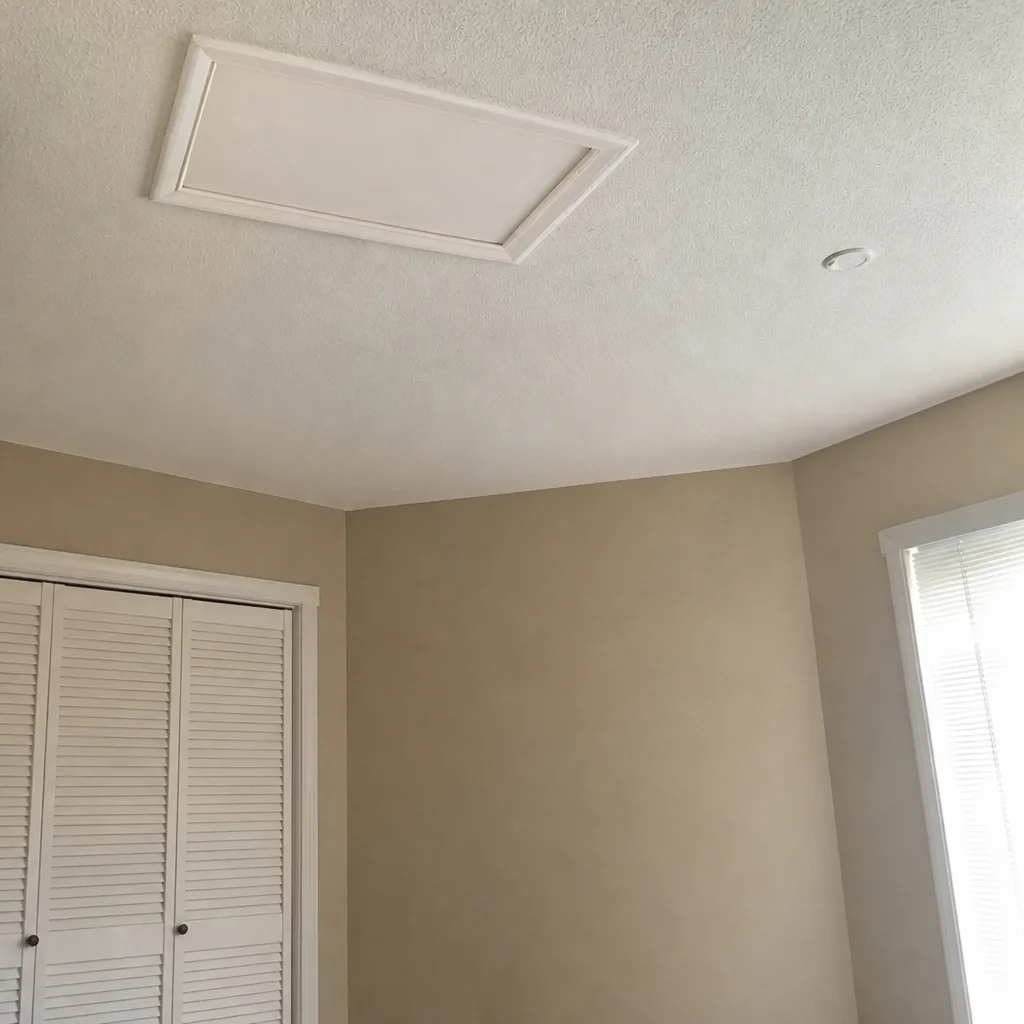
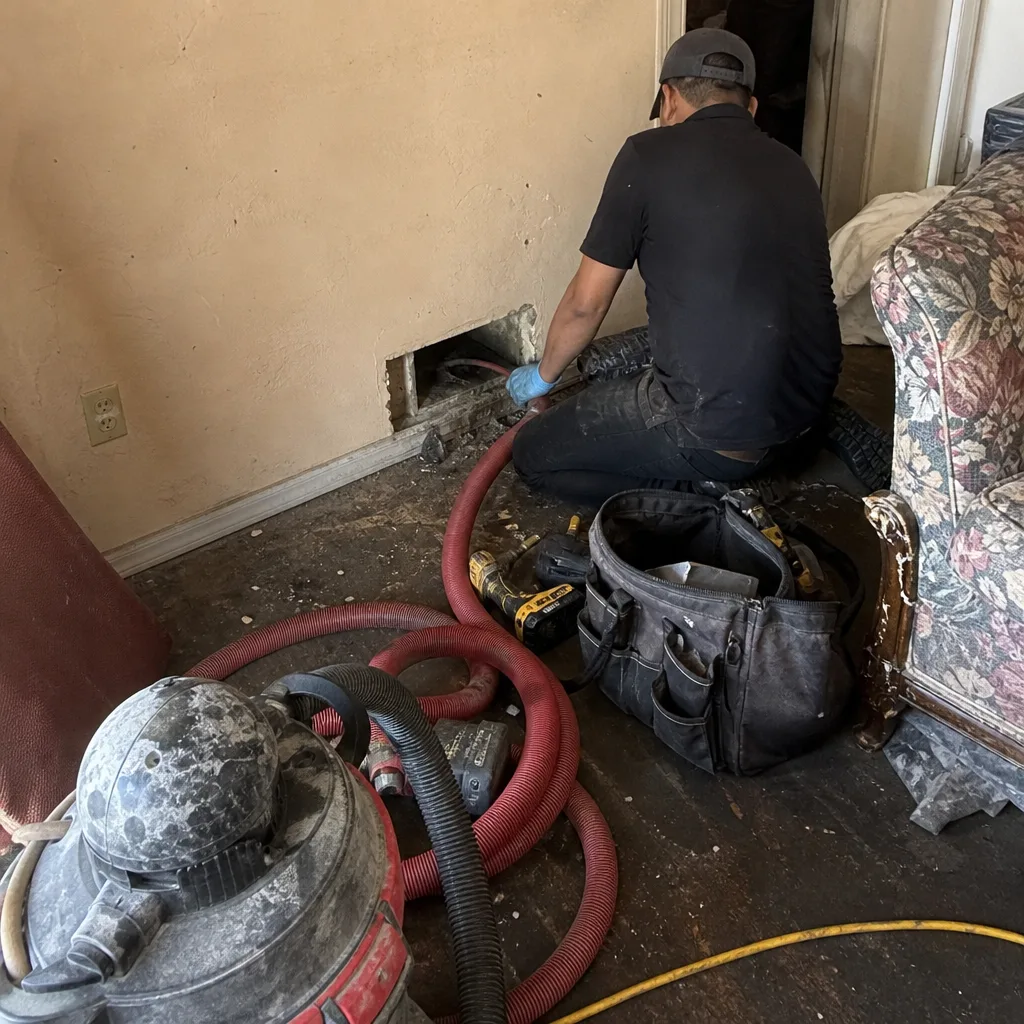
See the difference
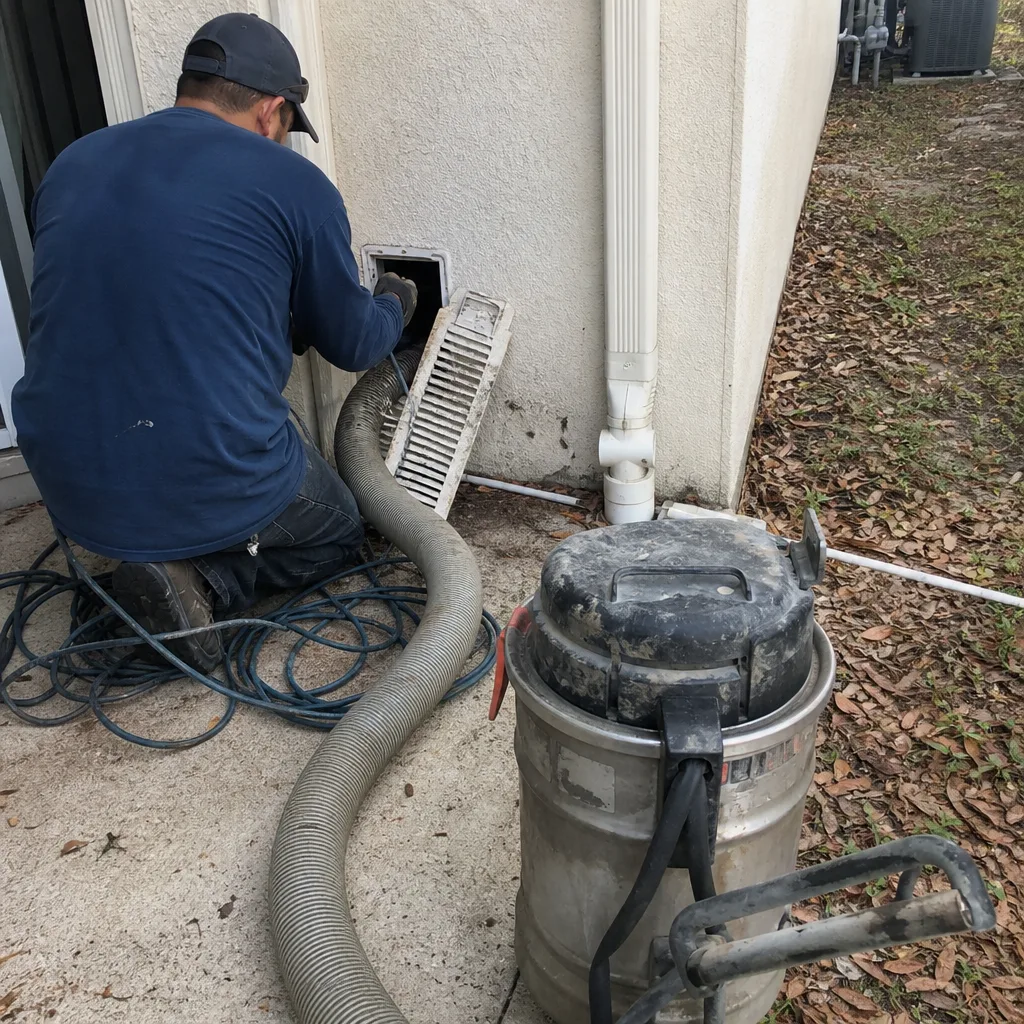 Before
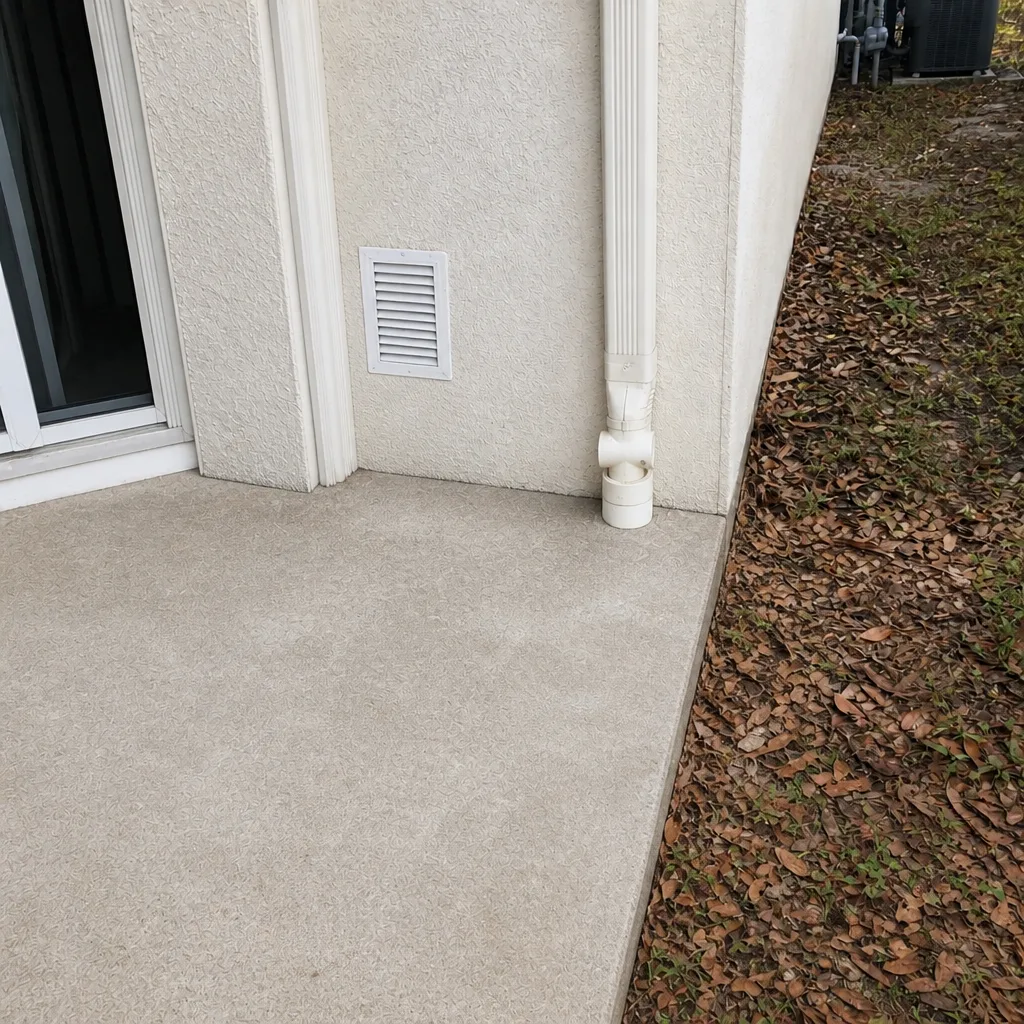 After
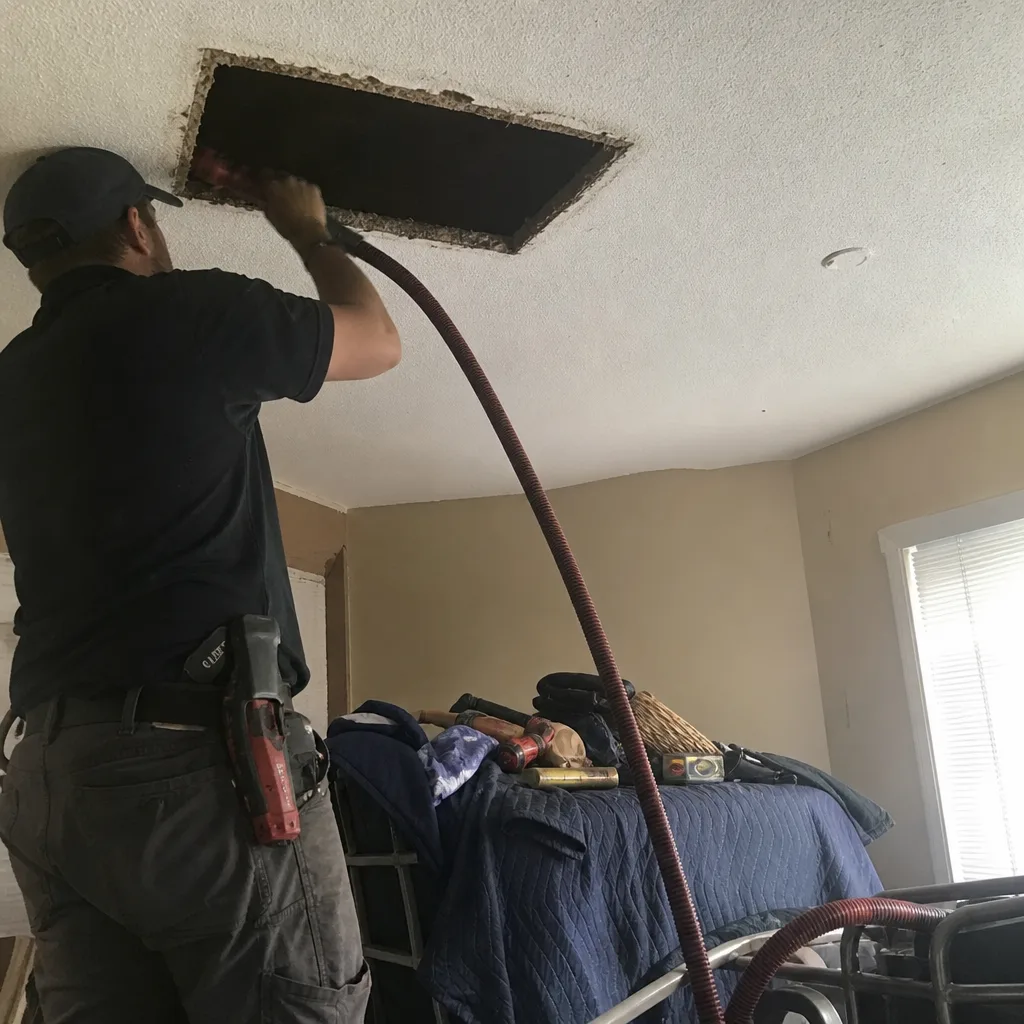 Before
 After
 Before
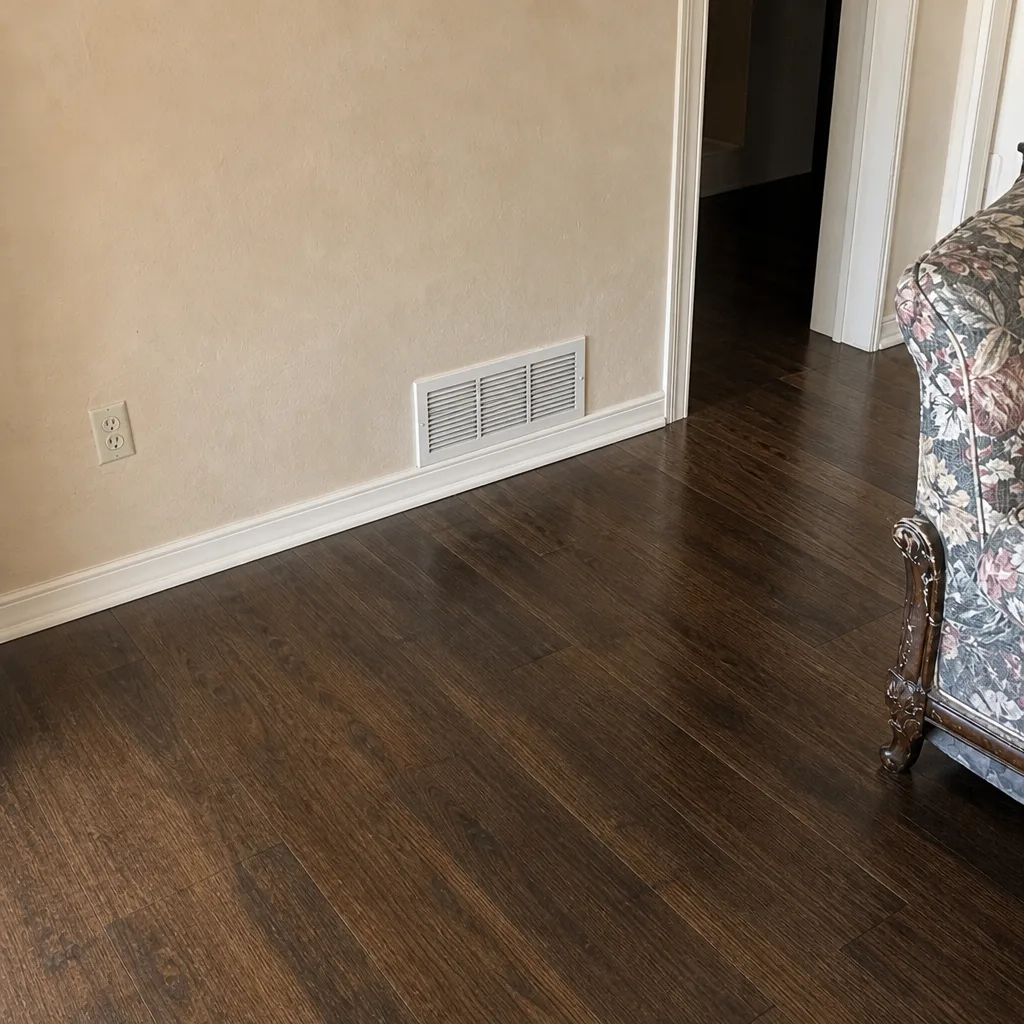 After
When to Call a Professional
A duct cleaning is worth scheduling when you notice symptoms: a musty smell when the cooling system starts, visible dust buildup returning on furniture within days of cleaning, allergy or asthma symptoms that flare indoors, uneven airflow between rooms, or an unusually high cooling bill. New homeowners and people with children or respiratory issues have more reasons to act early, especially in Lehigh Acres where the humid climate keeps the system wet nearly year-round. If your dryer vent hasn’t been cleaned in over a year, or you suspect disconnected or crushed ductwork, those are separate calls worth making sooner. Duct Cleaning Lehigh Acres offers free estimates in Lehigh Acres: call (855) 554-4780. We answer 24/7. Fast dispatch from 7am to 7pm, Sunday through Friday.
Frequently Asked Questions
Air duct cleaning in Lehigh Acres is quoted as a flat price per system, agreed before work starts, based on the size of your home, number of registers, and whether the air handler and coil are included. You won’t get a per-vent teaser price from us. Call (855) 554-4780 for a free estimate.
Every two to three years is a reasonable starting point for most Lehigh Acres homes, and one to two years for households with pets, children with allergies, or heavy construction nearby. The humidity here never lets the system dry out fully, so contamination builds faster than it would in a dry climate. Call (855) 554-4780 for an exact quote after an inspection.
Cheap quotes usually cover less: supply ducts only, no coil, no blower, no dryer vent, and no containment equipment. The low price is real, but the work is partial, and you often pay more to have it redone properly. Ask what the quote includes before you compare. Call (855) 554-4780 for a flat price on the full system.
Ask for before-and-after video inspection footage of your own ducts. A professional-grade system documents the interior of your ductwork, and that footage is your proof the interior was cleaned, not just the register. We show you the before and after. Call (855) 554-4780 to book an inspection.
Often yes. Construction dust, sawdust, and insulation fibers settle into ductwork during building, and the system usually gets used before the space is clean. Cleaning before move-in and again after the first cooling season starts the system off clean. Call (855) 554-4780 to schedule.
Yes, and more so than in dry climates. The moisture here creates a film inside ducts that supports mold and dust mite growth, and that film doesn’t clear on its own. Removing it restores airflow and reduces what you breathe. Call (855) 554-4780 for a free estimate.
The Bottom Line
Cleaning your ducts in Lehigh Acres isn’t a maintenance item you can judge by price. The humid climate builds a moisture-driven film that a shop-vac can’t touch, the soil infiltrates fine sand into every return, and new construction loads the system before anyone moves in. A real cleaning uses professional-grade agitation and HEPA negative pressure, covers every component from return to coil, and documents the result with before-and-after footage. And it includes the dryer vent, which is a fire-safety component, not an add-on. We’re air duct specialists, not generalists: cleaning, dryer vent, and repair under one roof, with professional-grade equipment and a flat price agreed before work starts. Visit us at Lehigh Acres for the full picture of what we do locally.
Get a Free Estimate
If you’ve read this far, you already know what a proper job looks like and what questions to ask. Let’s put that to work on your system. Call (855) 554-4780 for a free estimate on air duct cleaning, dryer vent cleaning, or duct repair in Lehigh Acres. We answer 24/7. Fast dispatch from 7am to 7pm, Sunday through Friday. We offer one flat price per system, agreed before any work starts, and before-and-after footage of your own ducts so you see exactly what you paid for. Start with Duct Cleaning Lehigh Acres and schedule an inspection today.
Written by the team at Duct Cleaning Lehigh Acres.