
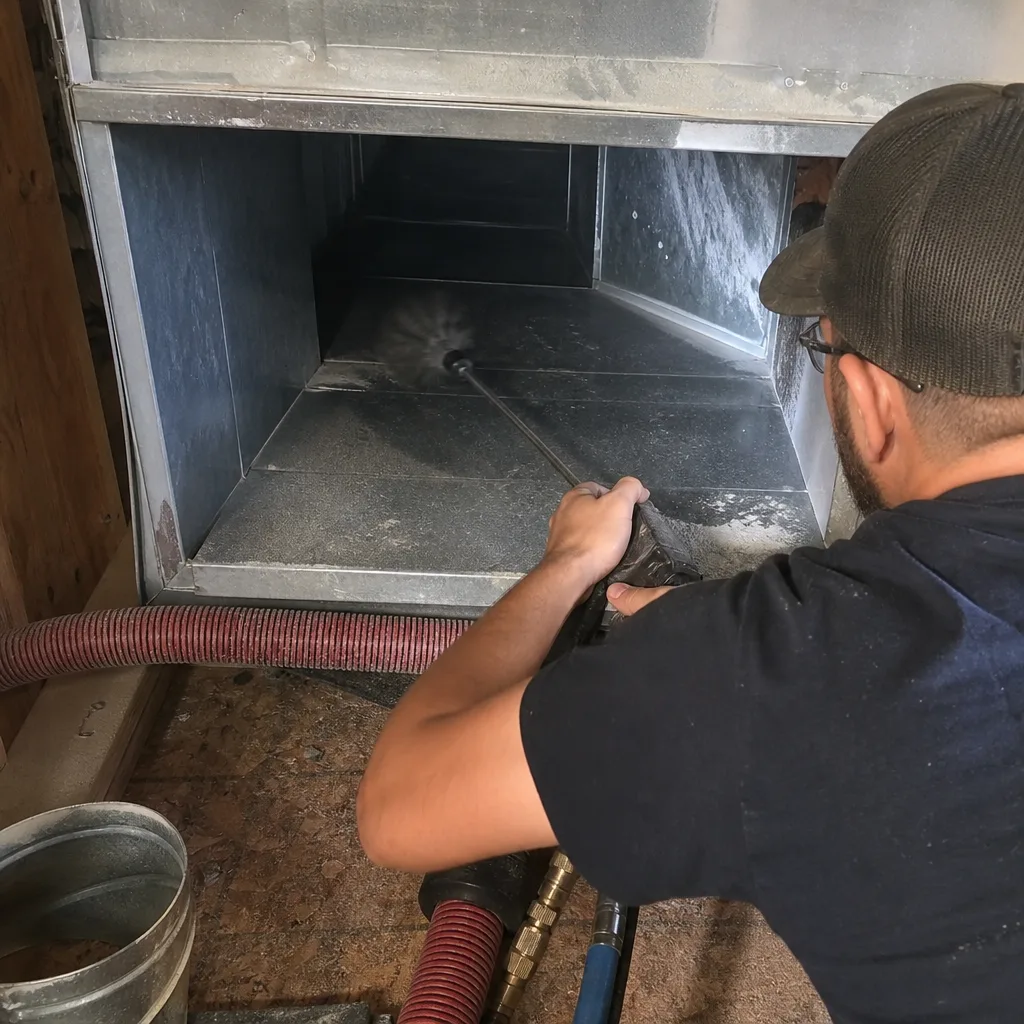
Last updated November 15, 2026
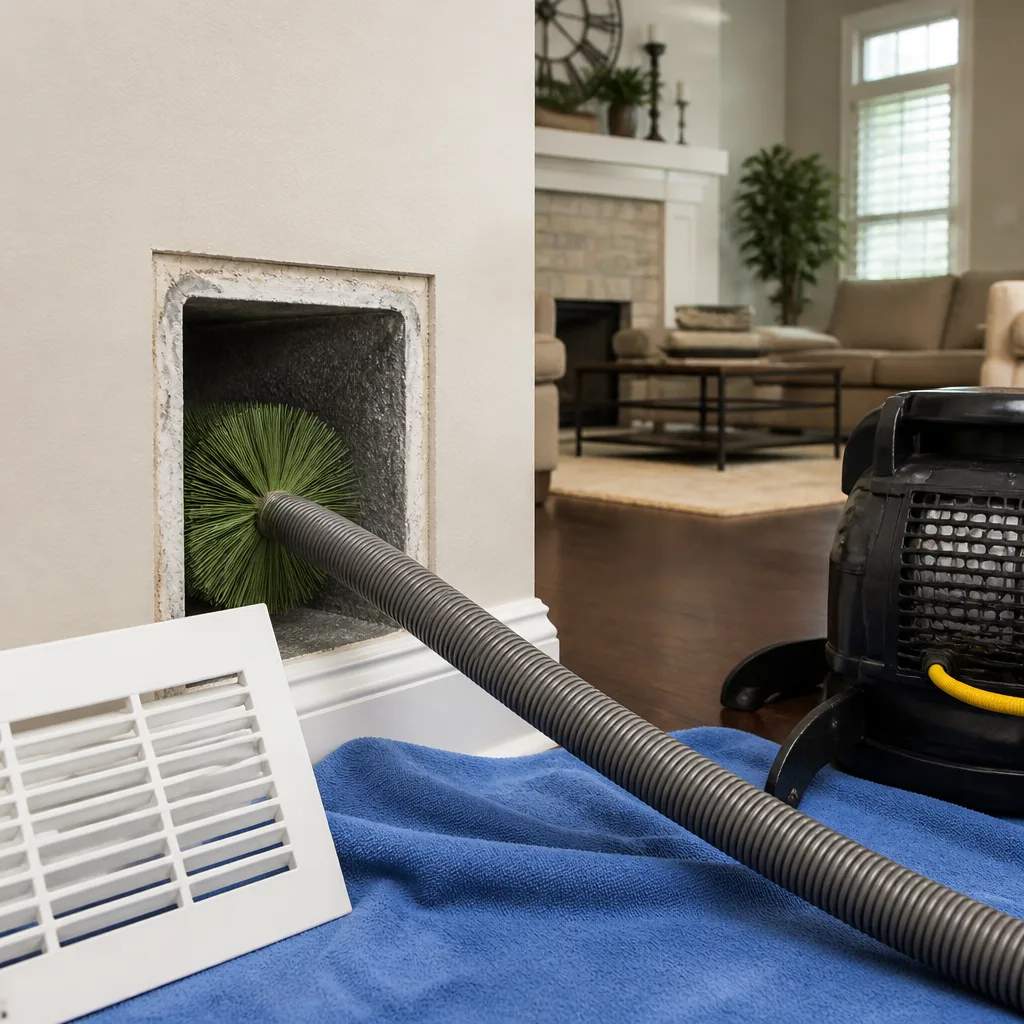 Whole-home duct cleaning
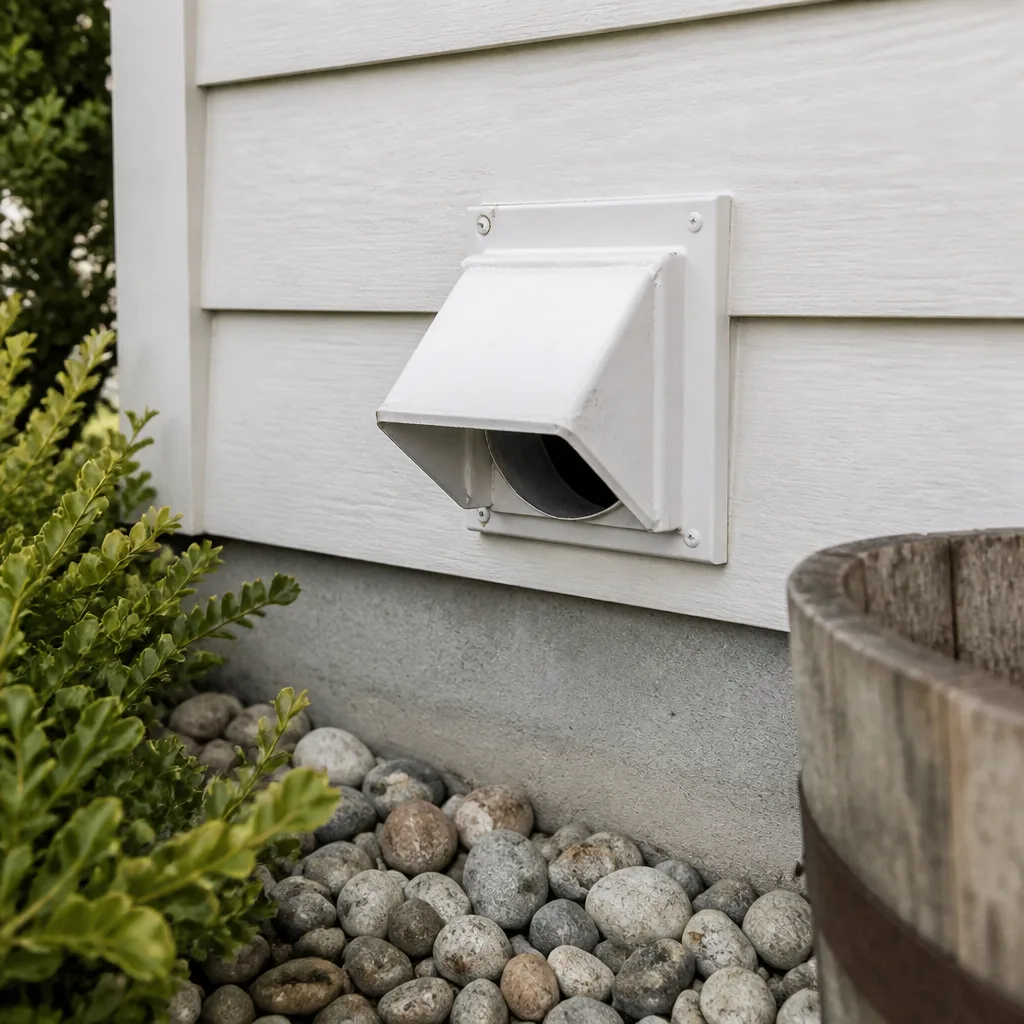 Dryer vent cleaning
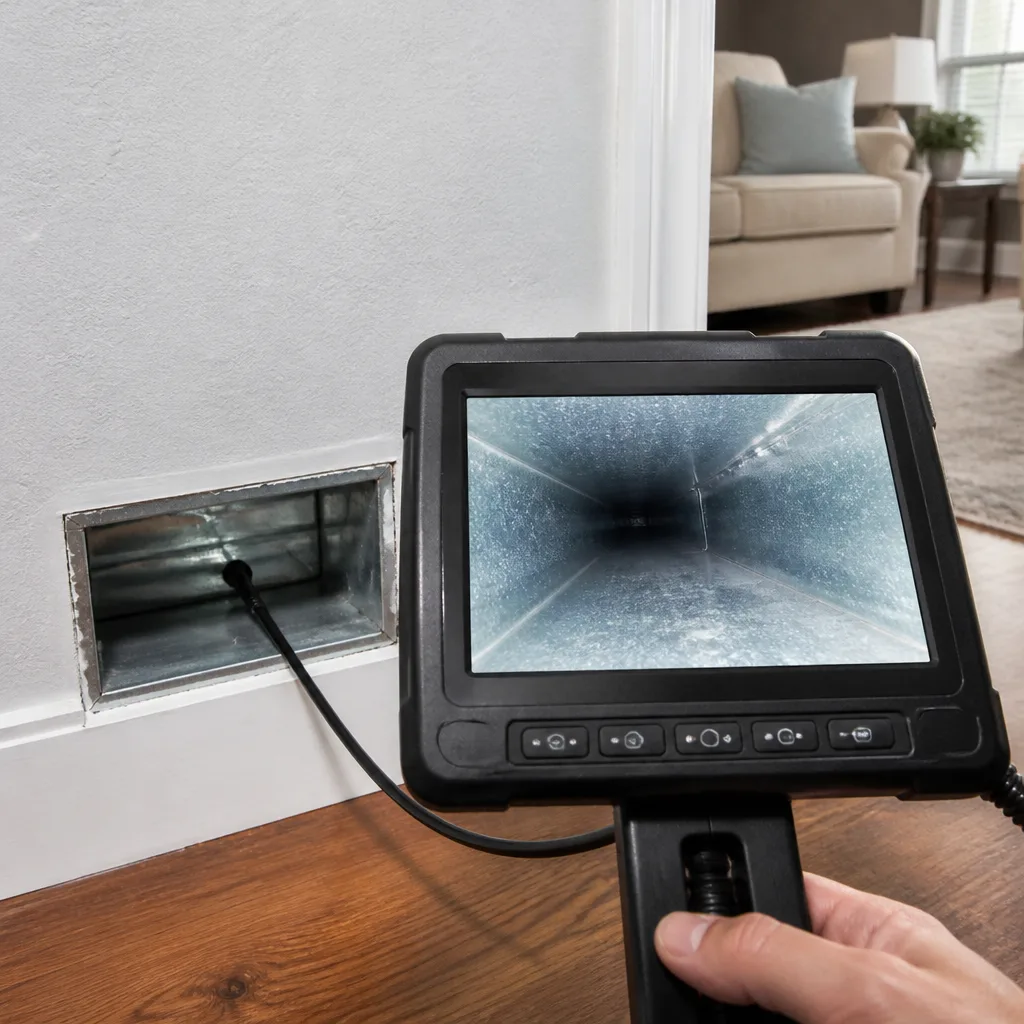 Camera inspection
 Sanitizing & deodorizing
Whole-system duct and dryer vent check with before-and-after photos - you see exactly what came out of your vents
That "$99 whole-house special" is a bait ad - the real number appears once they are in your hallway, or the "clean" is a shop-vac at the register. We photograph the inside of your ducts before and after instead.
Air Duct Cleaning Maintenance Schedule: What to Do and When
The EPA figure everyone quotes, “clean your ducts every three to five years,” was written with a Northern climate in mind, where an air handler runs maybe four months a year. In Lehigh Acres the system runs nearly all twelve. That single difference changes the contamination math more than any calendar rule, and it’s why a homeowner who follows the national interval here is often either cleaning years too early or months past due. This guide explains what actually drives duct contamination, how to build a schedule around real triggers instead of a generic number, and where the dryer vent fits into the same timeline. You’ll finish knowing how to turn your own system’s behavior into a maintenance plan that fits this climate.
Quick Answer
In Florida’s climate, most Lehigh Acres homes should plan a professional duct cleaning every two to four years rather than the national three-to-five, because year-round cooling pushes annual HVAC run-time well past the national average. Any event that introduces new contamination, such as renovation dust, rodent activity, water intrusion or a new pet, resets that clock immediately regardless of how long it’s been. Dryer vents follow a separate cadence and should be inspected at least once a year.
Styles & brands we work with
- Whole-home duct cleaning
- Dryer vent cleaning
- Camera inspection
- Sanitizing & deodorizing
Table of Contents
- Why the Standard 3-5 Year Rule Doesn’t Fit Florida
- Building a Baseline Schedule for a Lehigh Acres Home
- Event Triggers That Reset the Clock
- Using Filter Changes as an Early Warning
- The Dryer Vent Timeline: A Separate Schedule
- The Post-Cleaning Baseline Inspection
- Whole-Home Air Quality Systems and Duct Care
- Humidity, Allergens and the Lehigh Acres Housing Mix
Why the Standard 3-5 Year Rule Doesn’t Fit Florida
The common “every three to five years” advice assumes an HVAC system that gets a winter off. In much of the country, that’s real: the heat runs for a few months, the air runs for a few, and the system sits idle the rest of the year. The ductwork, in that scenario, spends maybe a third of the year actively moving air. That idle time matters because contamination accumulates mainly when air is moving through the ducts, pulling dust, pollen and debris past the filter and settling fine particles on interior surfaces.
Lehigh Acres doesn’t get that break. Cooling season here is essentially the whole year, and the air handler runs most days. A system operating well over 2,700 hours annually is moving several times the air volume of a Northern system on the same calendar. More air volume means more dust loading, more filter cycling, and a faster buildup rate in the ducts. That’s the core reason a schedule borrowed from a colder climate under-serves Florida homes: the same three-year interval represents far more operating time here than it does up north.
Two other local factors compound it:
- Outdoor particulate load. Sandy soil, seasonal pollen and near-constant lawn and landscape activity keep fine particles in the air, and every bit that gets past the filter ends up somewhere in the duct run.
- Humidity inside the system. Damp, cool air plus a humid return plenum is a favorable environment for biological growth on duct surfaces, and that growth doesn’t reset between seasons the way it does in a dry, cold climate.
The practical takeaway: treat three to five years as a floor, not a target. For most Lehigh Acres homes, a realistic starting interval is two to four years, adjusted up or down by the triggers in the sections below.
Building a Baseline Schedule for a Lehigh Acres Home
A workable maintenance plan starts with a baseline interval, then layers in event triggers and inspection checkpoints. Here’s how we’d build one for a typical home here.
- Set the starting interval by occupancy and pets. A home with no pets and no allergy sufferers can start at three to four years. Add pets, or a household member with asthma or allergies, and drop it to two to three.
- Check the filter every 30 days during peak cooling season. This is the leading indicator, not the ducts themselves. We explain how to read it in the filter section below.
- Schedule a baseline professional inspection after the first cleaning. This gives every future decision a reference point rather than guesswork.
- Re-inspect every 12 to 18 months if the household has pets, allergy sufferers, or is near an active construction area.
- Book a cleaning when a trigger event fires, regardless of where you are in the interval.
- Fold dryer vent inspection into the same annual visit so the two timelines stay synced.
If you’re starting from scratch, the first step is a professional assessment, and it’s worth understanding what a real air duct cleaning visit actually involves before you book one. Professional-grade equipment matters here: systems like Rotobrush and Nikro are built to agitate and extract the full duct run, not just the accessible grilles. Our technicians have up to 8 years of experience reading the condition of a system and recommending an interval that matches it.
Event Triggers That Reset the Clock
Calendar intervals are only half the plan. Several events introduce contamination faster than any time-based schedule accounts for, and when one happens, the clock resets to zero. We see these repeatedly in Lehigh Acres, and they’re worth knowing before you assume you’re “not due yet.”
- Renovation dust. Drywall sanding, demolition, cabinet removal, floor refinishing: any of these floods the return with fine particulate that settles throughout the duct run. A remodel that takes a month can undo two years of clean operation. Reset the interval after any significant renovation.
- Rodent intrusion. Small animals get into ductwork through connections and gaps, and the contamination they leave behind (droppings, nesting material, pathogens) is a health concern, not a housekeeping one. Any evidence of rodent activity in the ducts calls for professional cleaning, not a wait-and-see approach.
- Water intrusion. A roof leak, an AC condensate problem, or flooding that reaches duct insulation creates a moisture problem inside the system. Damp ductwork supports biological growth quickly in this humidity, so any water event merits an immediate inspection.
- New pets. Adding a dog or cat raises the particulate load in the home substantially. Pet dander and hair that bypass the filter accelerate duct loading, so a household that was on a four-year interval may need to drop to two or three.
- A new baby or a new allergy diagnosis. Not a contamination event in the technical sense, but a reason to tighten the interval. If indoor air quality just became a priority, get a baseline cleaning and inspection.
When a trigger fires, don’t wait for the interval to expire. Book a cleaning and a baseline inspection, and reset the calendar from that date.
Using Filter Changes as an Early Warning
Your filter is the best diagnostic tool you have, and it tells you more about duct contamination rate than any fixed interval. Here’s the logic: if the filter is loading faster than expected, the ducts are likely accumulating faster than your schedule assumes.
Watch for these patterns:
- Filter dirty before the expected change date. If your one-inch filter is loaded in three weeks instead of four, more particulate is reaching it than normal. That usually means more is getting past it into the ducts too.
- Visible dust around the registers. Streaking or dust rings around supply grilles point to debris being pushed out of the duct at the register.
- Sudden increase in household dust. More dust settling on surfaces after no lifestyle change is a strong hint the system is redistributing, not filtering, the particulate.
- Musty smell when the system starts. That odor is coming from somewhere, and often it’s the ducts. It warrants an inspection regardless of schedule.
If the filter is loading faster than the schedule accounts for, tighten the interval. If it’s loading slower than expected, the system is likely operating more efficiently and you can stay on the current plan. This is one reason a filter-change log is worth keeping: it turns your duct maintenance from a guess into a data-driven decision.
The Dryer Vent Timeline: A Separate Schedule
Dryer vent lint builds on its own timeline, distinct from duct dust, and it deserves its own checkpoint. Lint accumulation in the vent is a fire-safety issue: it’s one of the leading causes of residential fires. That puts the dryer vent on a tighter cadence than the air ducts.
The working schedule most homeowners follow:
- Inspect once a year even if everything seems fine.
- Clean every one to two years for a typical household, tighter for large families running the dryer daily.
- Immediately after a warning sign: slower drying times, the dryer running hotter than usual, a burning smell, or visible lint around the vent termination. Any of these means stop and get it looked at.
- Keep the outdoor vent flap clear. A stuck flap or a nest in the termination restricts airflow and accelerates the problem.
Because the dryer vent and the air ducts are separate systems, it’s easy to forget one while focusing on the other. Book them together: request dryer vent cleaning in the same visit as the duct cleaning and both stay on schedule. Bringing in a specialist who handles both, using proper containment like Abatement Technologies negative-air tools, captures the lint and debris instead of pushing it back into the laundry room. Our technicians have up to 8 years of experience working with these systems, and dryer vent work is part of the job, not an add-on.
The Post-Cleaning Baseline Inspection
Here’s the step most cleaning schedules skip: after a professional cleaning, take the time to establish a baseline. A baseline inspection records the actual condition of your ductwork on the day it was cleaned, so every future decision has a reference point. Without it, every “is it time for a cleaning?” question is guesswork.
What a proper baseline inspection covers:
- Interior condition of the main trunk and branch runs, where accessible. A technician will photograph the interior so you can see what a clean duct looks like in your own home.
- Register and grille condition, including any debris pushed to the edges.
- The return plenum and filter housing, which often shows the highest accumulation.
- Flexible duct integrity, checking for crushed, torn or disconnected sections. A compromised duct leaks air into the attic or walls and pulls contaminants in, and it’s often the reason a homeowner’s air quality never improves despite regular cleaning. Some cleaners don’t repair this, and we see it left behind repeatedly. Duct repair is part of running a healthy system, not a separate concern.
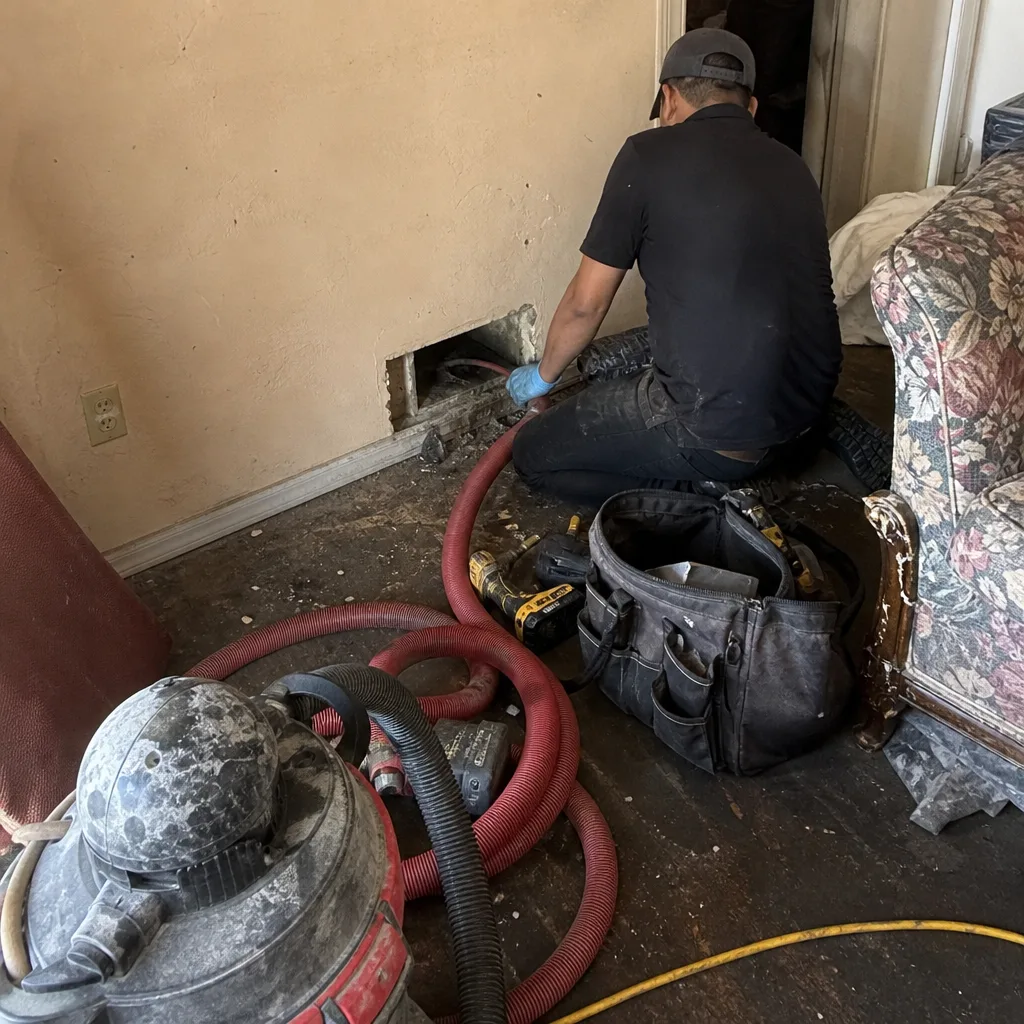
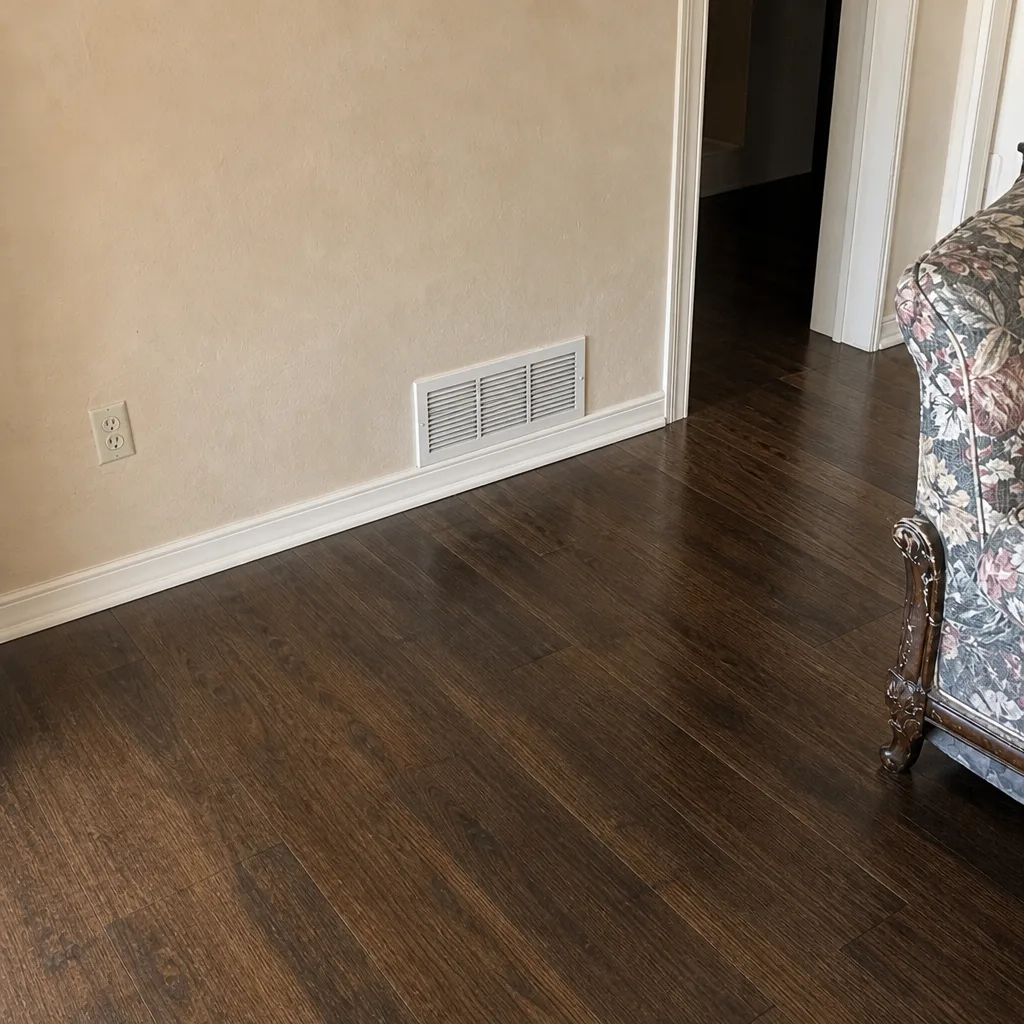
- Before-and-after photos of your own duct interior, which we take on every job. This is also how we confirm the work actually got done, and it makes tracking conditions over the years straightforward.
- A written record of the date, system condition and recommended next interval. File it. Every future scheduling decision builds from this baseline.
Over time this record becomes a maintenance history, and that’s what makes the schedule work: you’re cleaning based on how your specific system is behaving, not a universal number.
Whole-Home Air Quality Systems and Duct Care
If your home has a whole-home air quality system, it interacts with the ducts and changes the maintenance equation. Familiar brands like Honeywell and Aprilaire make filtration and ventilation components that sit inside the ductwork, and their condition matters as much as the ducts themselves. Filtration systems rated for deep particle removal need filter changes on their own schedule, and a system whose filters are overdue can’t do its job. Media filters, UV components, and ventilation controls all affect how much reaches the ducts and how fast they load.
A duct professional who understands this system doesn’t just clean the ducts in isolation. They account for the components, check whether the filter housing is doing its job, and align the cleaning interval with the filtration system’s capabilities. If you’ve installed a higher-efficiency filtration system, your ducts may stay clean longer, which matters for a Lehigh Acres home running the air handler year-round.
When a technician who understands these systems is on site, they can point out a filtration component that’s underperforming, a housing that’s bypassing air, or a media filter due for replacement. That’s system-aware service. The schedule above assumes the ducts alone; if any filtration component is struggling, tighten the interval accordingly.
Humidity, Allergens and the Lehigh Acres Housing Mix
Lehigh Acres sits in a stretch of South Florida where humidity defines most of the year. Inside the duct system, that humidity is a variable that doesn’t show up in a Northern schedule. Cool air moving through an unconditioned or poorly insulated duct run in a humid attic can condense moisture on the exterior, and any moisture inside the system supports biological growth. The visible result is the musty smell some homeowners know all too well.
The local housing stock adds another layer. Homes around Lehigh Acres include a mix of older construction and newer builds, and older ductwork often has looser connections, more flex duct than the modern standard, and a higher rate of leaks into the attic. Leaks pull humid Florida attic air into the system and pull contaminants with it. Homes near active construction areas see higher particulate loads, and homes with sandy lots see more fine dust entering through the return.
For allergy and asthma sufferers, this matters directly. The schedule above already tightens for those households (two to three years instead of three to four), and the baseline inspection is the diagnostic step that reveals whether humidity, leaks, or a mix of both is driving the contamination. If you’ve never had your ducts serviced and suspect buildup, start with an assessment and let the system’s condition guide the interval rather than the calendar.
Common Mistakes to Avoid
- Following the national three-to-five-year rule without adjustment. In a system running year-round in Florida, that interval leaves homes overdue. Treat the national number as a starting point you shorten, not an answer.
- Cleaning on a calendar and ignoring event triggers. A renovation or rodent intrusion resets the clock, but homeowners who only look at the calendar clean too late. Log events as they happen.
- Skipping the baseline inspection. Without a documented post-cleaning condition, you have no reference point. It’s the step that makes every future decision trustworthy, and skipping it wastes the value of the cleaning itself.
- Forgetting the dryer vent. It follows a separate, tighter timeline because lint is a fire risk. If you only think about ducts, the vent goes unchecked for years.
- Assuming a cheap quote is a good deal. In Lehigh Acres, a low-teaser quote often becomes a much larger invoice once the technician is on site. A specialist who uses professional-grade equipment (Rotobrush, Nikro, Abatement Technologies) gives one flat price per system agreed before work starts, not per-vent pricing.
- Ignoring duct repair. A torn, crushed or disconnected run means cleaning won’t hold. Fix the duct integrity before or alongside the cleaning, or the problem returns.
- Reading filters only when they clog. A filter loading faster than expected is a signal, not a nuisance. Log the change dates and read the trend.
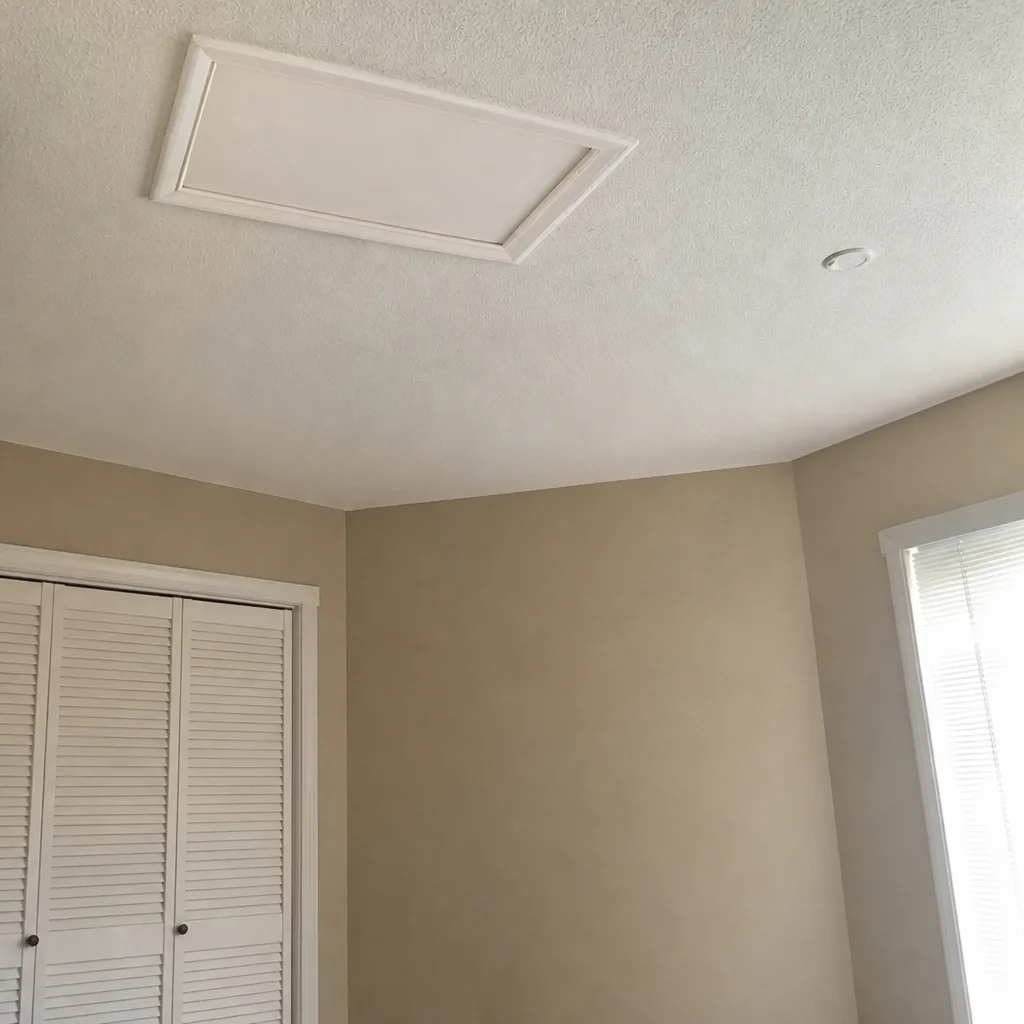
See the difference
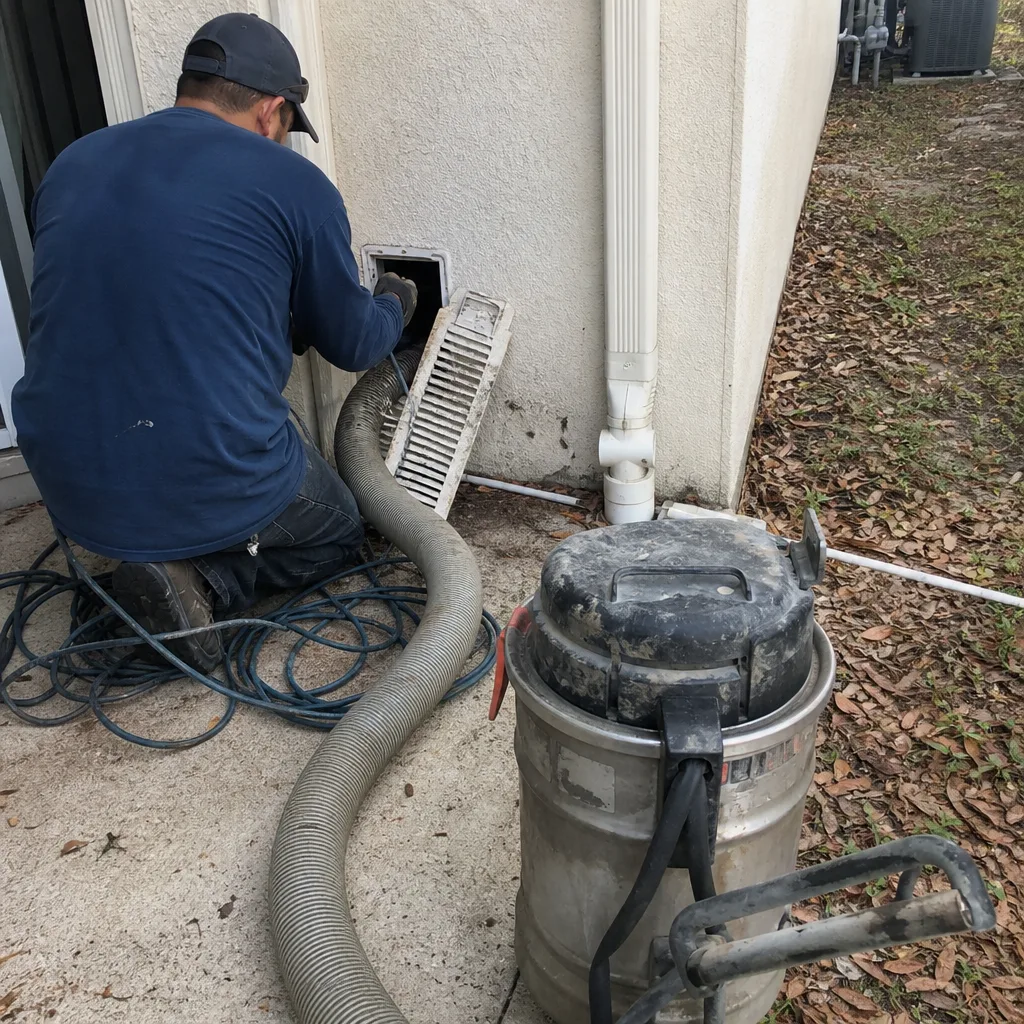 Before
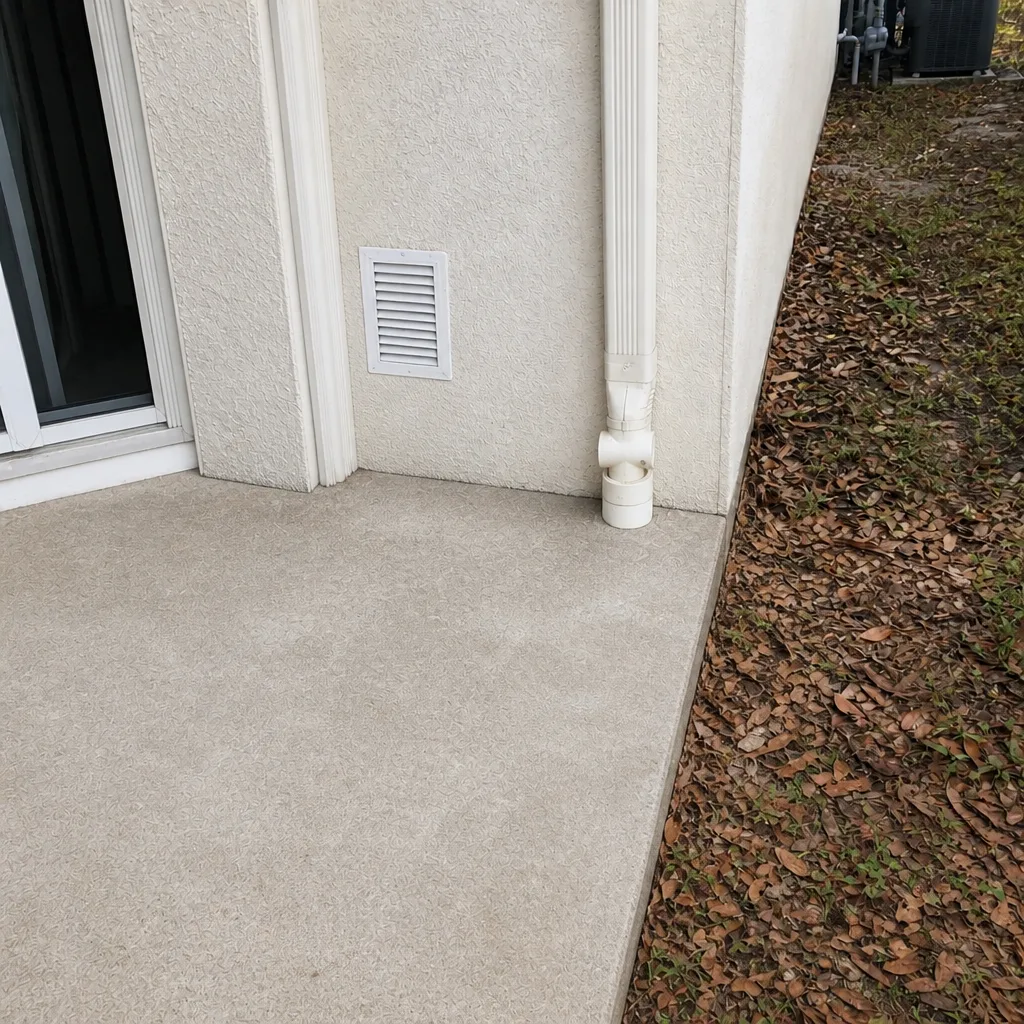 After
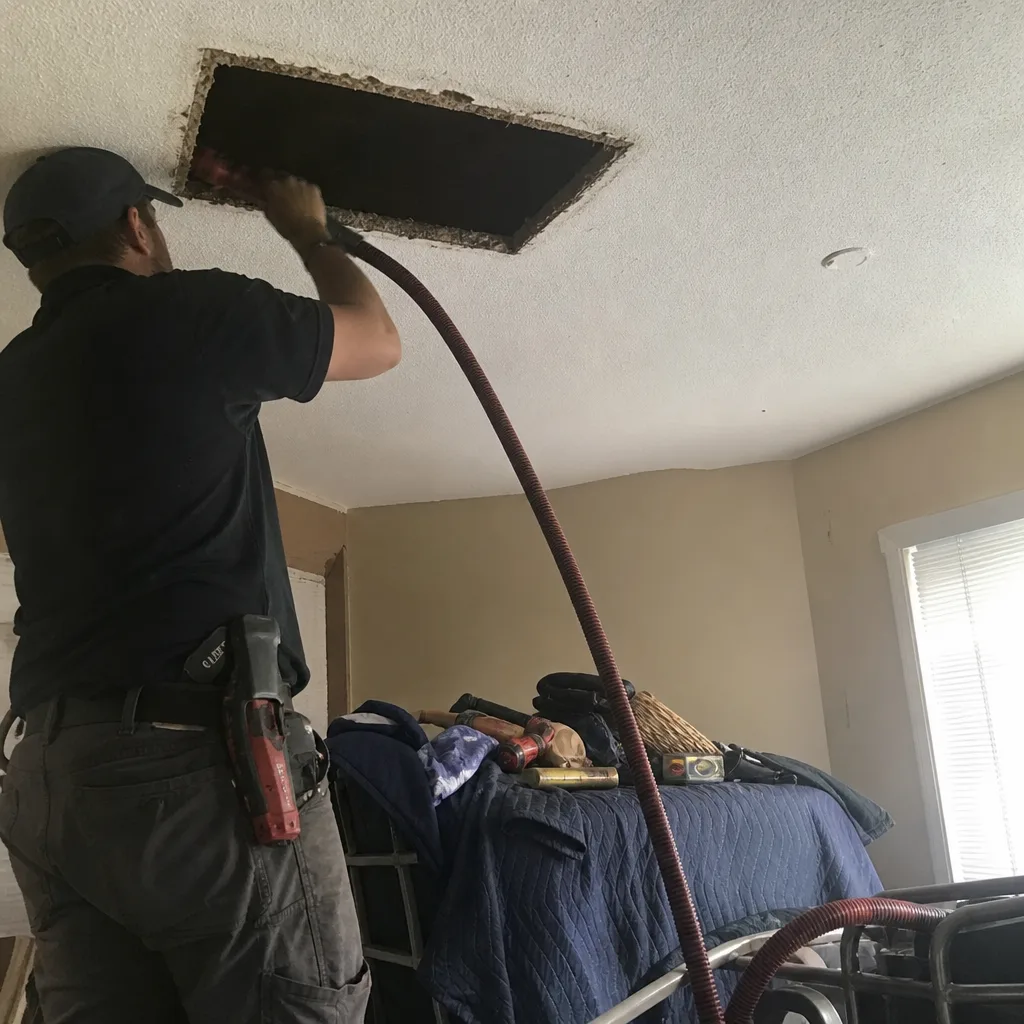 Before
 After
 Before
 After
When to Call a Professional
Some maintenance can wait on a schedule; certain situations shouldn’t. Call a professional if you’ve never had your ducts serviced and the home is more than a few years old, or if the system is pushing visible dust into rooms and the filter changes aren’t keeping up. Any trigger event (renovation, rodent evidence, water intrusion, a new pet) warrants an inspection regardless of the calendar. A persistent musty smell, unexplained allergy symptoms that worsen indoors, or a dryer that’s running hotter or taking longer to dry are all reasons to get a system checked. So is suspicious ductwork that looks crushed or disconnected. Duct Cleaning Lehigh Acres offers free estimates in Lehigh Acres; call (855) 554-4780. We answer 24/7, and fast dispatch runs from 7am to 7pm, Sunday through Friday.
Frequently Asked Questions
Most Florida homes should plan a professional cleaning every two to four years, shorter than the national three-to-five guideline, because the air handler runs nearly year-round here. Homes with pets or allergy sufferers should stay closer to two to three years. If you’ve had a renovation, rodent activity or water intrusion, book now regardless of interval. Call (855) 554-4780 for an exact quote, and estimates are free.
Not directly. The three-to-five-year figure assumes a Northern climate with a four-month HVAC season; Lehigh Acres runs the system nearly all year, so the same interval represents far more operating time and faster buildup. Use it as a floor, not a target. Call (855) 554-4780 for a free estimate.
Whole-system residential duct cleaning in Lehigh Acres typically runs in the range of a few hundred dollars for a standard single-system home, depending on the number of systems and the condition of the ductwork. The written estimate sets the final price, and there’s no per-vent billing. Call (855) 554-4780 for an exact quote, and estimates are free.
Cheap teaser quotes often turn into a far larger invoice once the technician is on site, or the work uses consumer-grade vacuums that don’t actually extract the buildup. A real specialist gives one flat price per system agreed before work starts, and shows you before-and-after photos of your own ducts. Call (855) 554-4780 for a fair, written estimate.
Ask for before-and-after photos of your own duct interior, taken during the job. A professional cleaning with proper containment (like Abatement Technologies negative-air tools) captures the dislodged debris rather than recirculating it, and photos document the result. Every cleaning we do includes them. Call (855) 554-4780 for a free estimate.
Yes. The dryer vent follows a tighter timeline than the ducts because lint is a fire risk, and booking both in the same visit keeps both systems on schedule. A single appointment covers air duct and dryer vent work, so you don’t need multiple contractors. Call (855) 554-4780 for a free estimate, and we’ll build a schedule around your home.
The Bottom Line
A duct cleaning schedule is only useful if it fits your climate and your home. In Lehigh Acres, that means starting at two to four years, shortening the interval for pets and allergy sufferers, and resetting the clock whenever a renovation, rodent intrusion or water event occurs. Use your filter changes as a leading indicator, keep the dryer vent on its own annual timeline, and establish a baseline inspection after every cleaning so each future decision has a real reference point. The result is a maintenance plan grounded in how your system actually behaves, not a generic number borrowed from a colder climate. For an assessment and a written estimate, call (855) 554-4780. We answer 24/7, with fast dispatch from 7am to 7pm, Sunday through Friday, in Lehigh Acres. You can also start with the main Duct Cleaning Lehigh Acres page to see the full scope of what we handle.
Written by the team at Duct Cleaning Lehigh Acres.