
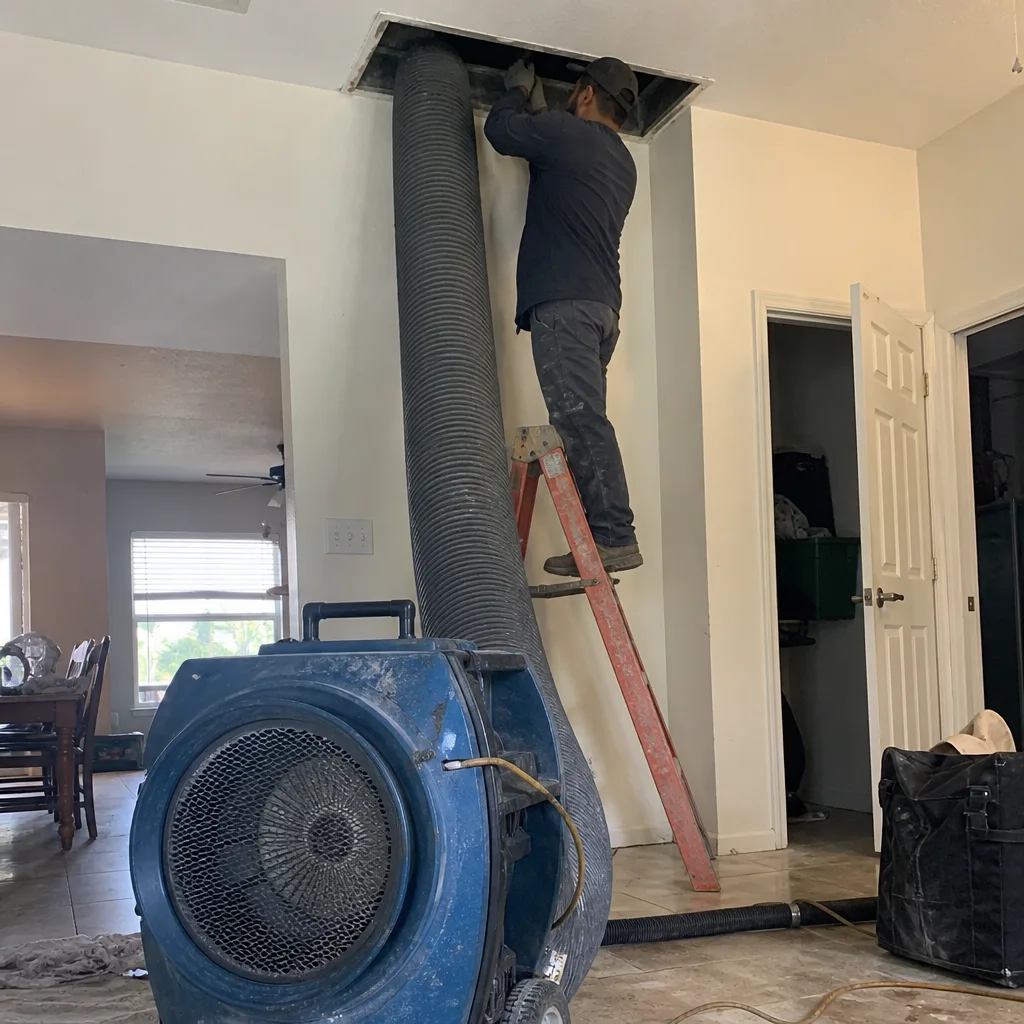
Last updated November 15, 2026
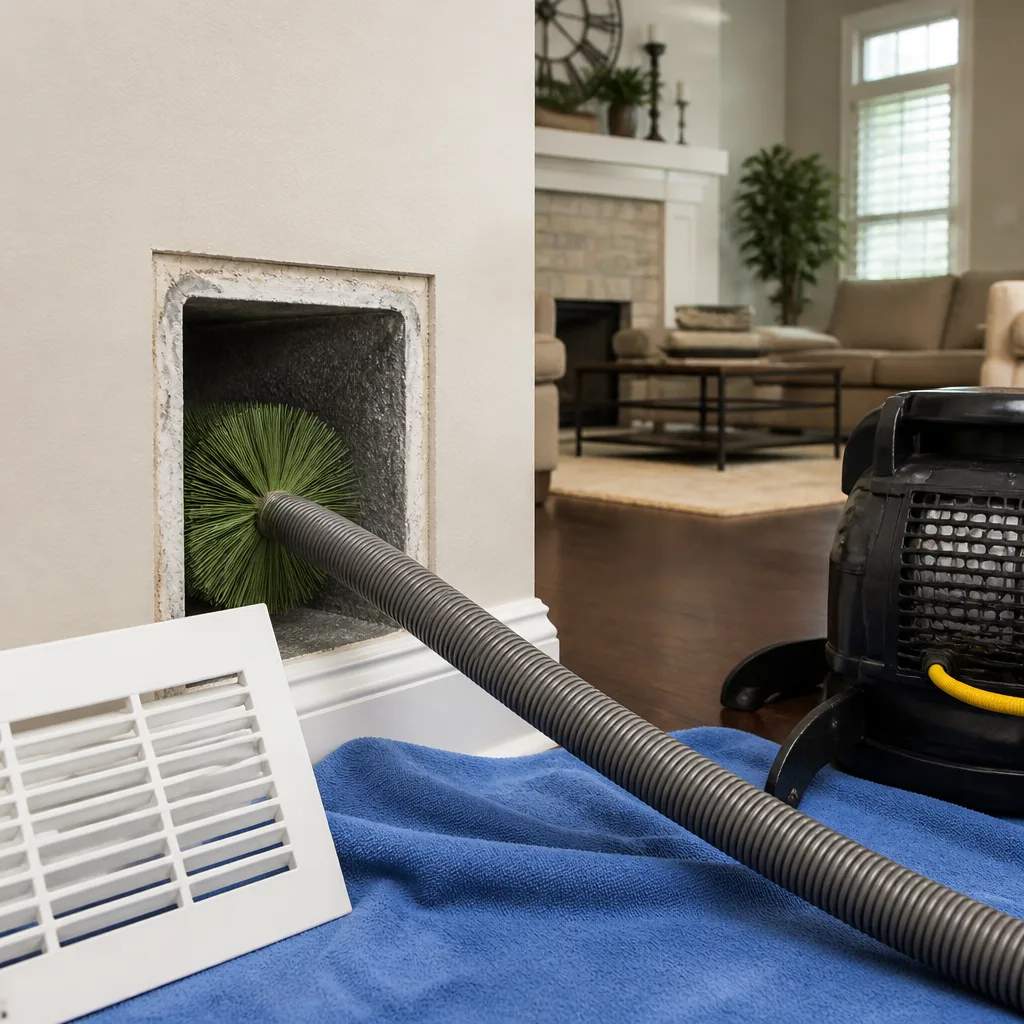 Whole-home duct cleaning
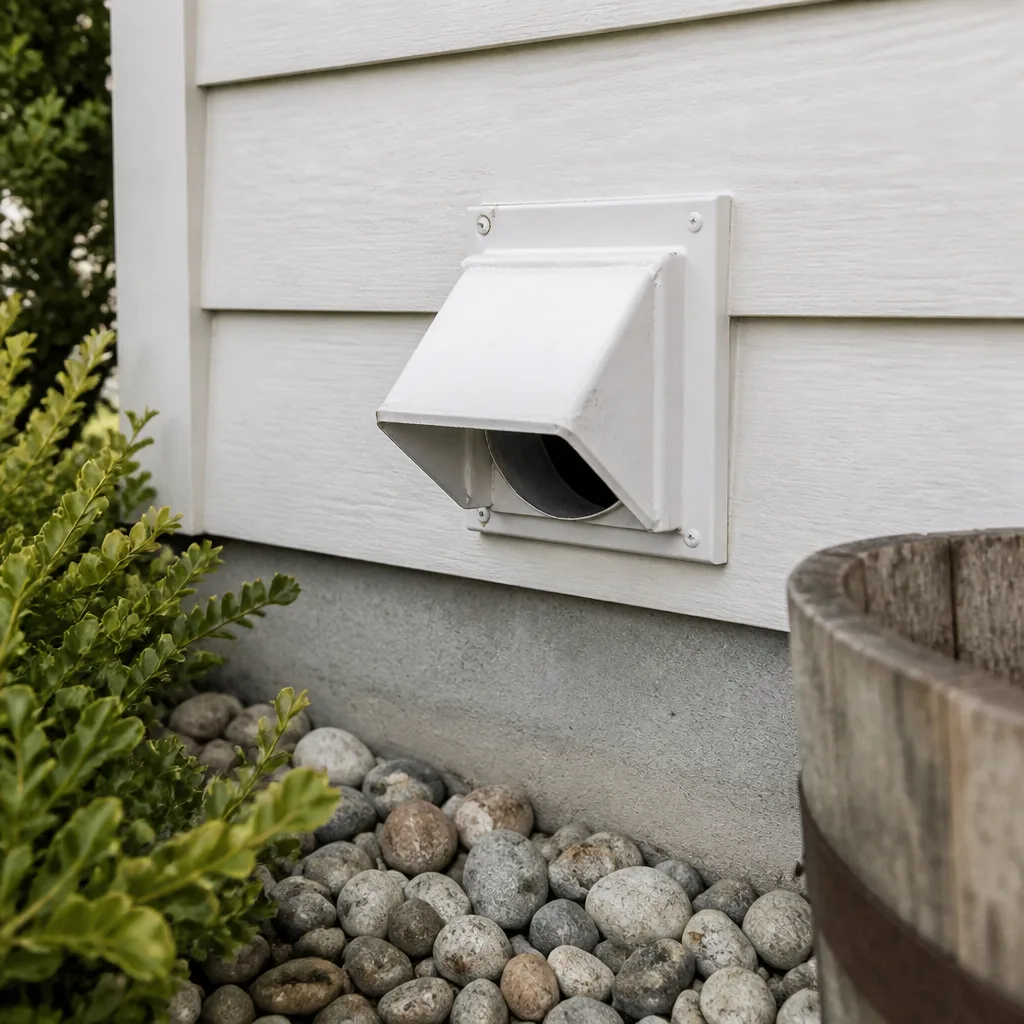 Dryer vent cleaning
 Camera inspection
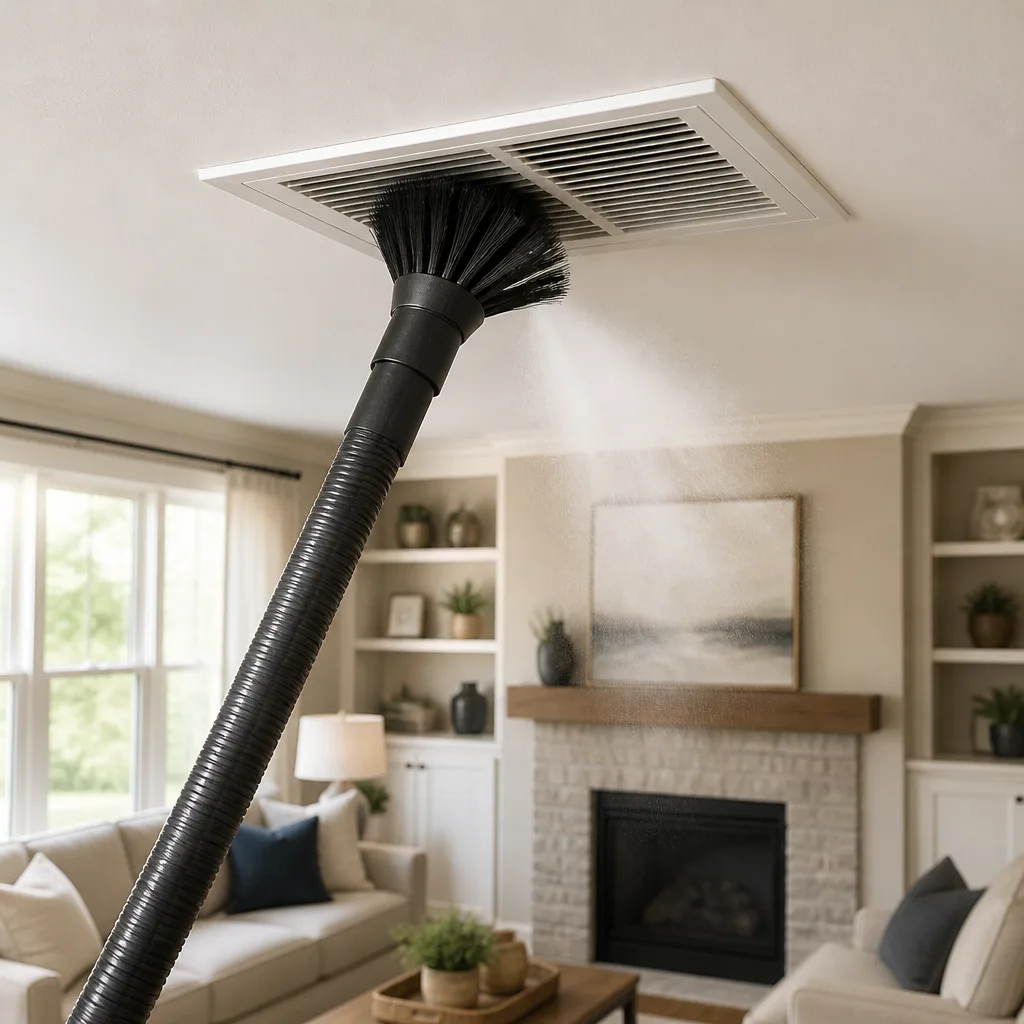 Sanitizing & deodorizing
Whole-system duct and dryer vent check with before-and-after photos - you see exactly what came out of your vents
That "$99 whole-house special" is a bait ad - the real number appears once they are in your hallway, or the "clean" is a shop-vac at the register. We photograph the inside of your ducts before and after instead.
Seasonal Air Duct Cleaning Care for Lehigh Acres: Year-Round Homeowner’s Guide
Lehigh Acres doesn’t really have four seasons. It has wet and dry, and each one damages your duct system in a completely different way. Most duct cleaning advice you’ll find online was written for a northern climate, where the whole calendar revolves around heating season and the wear that comes with it. That schedule doesn’t fit here. In Lehigh Acres, the stress on your ductwork builds during the summer rainy season, when moisture pushes into return systems, and again during the dry months, when pollen and dust find their way in through open windows. This guide walks you through both cycles, month by month, so you can time your duct care around the way this part of Florida actually breathes.
Quick Answer
In Lehigh Acres, air duct care should follow two cycles, not four seasons: a pre-wet-season inspection in April and May, a mid-rainy-season check for condensation and moisture, a storm-response pass after any severe weather, and a dry-season focus on pollen and dust from November through March. Professional air duct cleaning fits best just before the wet season starts and again after the dry season ends, so your system enters each stress period clean. Homes with pets, allergy sufferers, or recent renovation work usually need a cleaning sooner than the calendar suggests.
Styles & brands we work with
- Whole-home duct cleaning
- Dryer vent cleaning
- Camera inspection
- Sanitizing & deodorizing
Table of Contents
- Why Lehigh Acres Has Two Duct Seasons, Not Four
- Pre-Wet-Season Prep: What to Do in April and May
- Mid-Rainy-Season Response: Reading the Signs of Duct Condensation
- Post-Storm and Hurricane Checklist for Your Duct System
- Dry-Season Optimization: Pollen, Dust, and Open Windows
- How to Time Professional Cleaning Around Lehigh Acres Weather
- Dryer Vent Care Through the Year
- When Duct Repair Becomes the Real Priority
Why Lehigh Acres Has Two Duct Seasons, Not Four
If you moved to Lehigh Acres from a colder part of the country, the duct advice you brought with you probably doesn’t apply. Up north, the calendar is built around the furnace: filters get changed when the heat comes on, ducts get cleaned before winter, and summer is a quiet stretch. Here, the pressure runs the other way. The air conditioning runs hard for months, and the seasonal cycle that matters is wet versus dry.
That difference changes what you’re actually protecting against. In a heating climate, the enemy is dry, sooty air and the dust that builds up over a closed-up winter. In Lehigh Acres, the enemy is moisture first and particulate second. A duct system that’s clean going into the rainy season handles humidity far better than one that’s already carrying a layer of dust and debris, because that layer holds moisture against the duct walls and gives it somewhere to sit.
Here’s how the two cycles break down:
- Wet season (roughly June through October): Heavy afternoon rains, high indoor humidity, and the risk of condensation forming inside duct runs that aren’t well insulated or well sealed. Return ducts pull in humid air all day.
- Dry season (roughly November through March): Lower humidity, more open windows, and a steady load of pollen and fine dust pulled in through windows and doors. Air infiltration goes up, and so does the particulate load in your ducts.
Treating these as two separate maintenance windows is the single biggest shift most Lehigh Acres homeowners can make. It’s not about cleaning your ducts more often, it’s about cleaning them at the right moment so the work holds up through the season that stresses them. We’ve seen the difference this timing makes, and it’s why we build our scheduling advice around the local weather pattern rather than a generic four-season template.
Pre-Wet-Season Prep: What to Do in April and May
April and May are the calm before the rain. Humidity is still manageable, the AC is running but not yet working at full summer load, and you have a window to get your duct system into shape before the wet season settles in. This is the most valuable prep period on the Lehigh Acres calendar, and most of the work is inspection and small fixes.
Start with the return grilles. These are the large intake openings that pull air back into the system, and they collect a surprising amount of dust over the dry season. A clogged return grille restricts airflow and forces your air handler to work harder. Pull the grille, vacuum it, and look at what’s sitting behind it. If there’s a visible mat of dust on the duct surface just inside the opening, that’s a sign the whole system is due for attention.
Next, check the condensate drainage near your air handler. The air handler produces condensate as it cools and dehumidifies, and that water needs a clear path to drain. A slow or blocked drain line can back up, and in a humid climate that standing water becomes a moisture source right next to your ductwork. Look for a full drain pan, standing water, or a line that isn’t flowing.
Then assess your flex duct runs for sag. Flexible ductwork is common in Florida homes, and when a run sags, moisture can collect in the low point. Sagging also restricts airflow and can pull a duct loose from its connection. Walk your attic or crawlspace if you can access it safely and look for:
- Duct runs that dip noticeably between supports
- Loose or disconnected joints where sections meet
- Torn or crushed sections of the outer jacket
- Any place where the duct is resting on a sharp edge or the structure itself
A numbered prep sequence for April and May:
- Replace your air filter and note the date, so you can track the change interval through the summer.
- Remove and clean every return grille in the house.
- Inspect and clear the condensate drain near the air handler.
- Check accessible flex duct runs for sag, tears, and loose connections.
- Book a professional air duct cleaning before the heavy rains begin if it’s been more than a few years or you’ve noticed buildup.
This prep work pays off through the whole wet season. A clean, well-sealed system handles humidity far better than one that’s already struggling.
Mid-Rainy-Season Response: Reading the Signs of Duct Condensation
Sometime in July or August, indoor humidity climbs and stays there. This is when duct condensation becomes a real concern in Lehigh Acres. Condensation happens when warm, humid air meets a surface cooler than its dew point, and inside an air-conditioned duct system, that surface is the duct wall itself. When it happens, the effects aren’t always obvious at first.
Here’s what duct condensation typically looks like when it’s occurring:
- Water staining or dark streaks on the outside of duct runs, especially in the attic
- Damp, musty, or “wet basement” smells coming from supply registers when the AC kicks on
- Visible moisture or droplets on metal duct surfaces or on the air handler cabinet
- A sudden spike in indoor humidity that doesn’t drop even when the AC is running
- Condensation forming on the supply registers themselves
When you spot these signs, the response isn’t to ignore them until fall. Moisture sitting inside a duct system creates conditions where biological growth can take hold, and that’s what turns a minor humidity issue into an air quality problem. The right response is to find where the moisture is coming from: a duct that’s lost its insulation, a joint that’s pulled apart, a system that’s short-cycling and not running long enough to dehumidify, or a return that’s pulling in humid attic air.
During the rainy season, keep an eye on your filter. High humidity plus sustained AC operation means the filter loads up faster than it does in the dry months. Check it every few weeks and change it when it looks grey or matted. A clogged filter restricts airflow, which can make condensation worse by dropping the temperature of the coil and letting the system run colder than it should.
If you’re seeing moisture and you’re not sure where it’s coming from, that’s the point to bring in someone who can look at the whole system. Our technicians have up to 8 years of experience reading these signs, and professional equipment shows what a visual check can’t: where the moisture is actually collecting and whether the duct connections are still sound. The goal isn’t a quick clean, it’s finding the source.
Post-Storm and Hurricane Checklist for Your Duct System
Severe weather is a fact of life in this part of Florida, and a storm does more to your duct system than most homeowners realize. Two things happen. First, exterior vents and any compromised openings let debris and moisture in. Second, the rapid pressure changes that come with a severe storm can physically dislodge duct connections that were already marginal. A joint that’s been hanging on by a thread for a year can come apart when the pressure swings.
After any significant storm, work through this checklist before you assume everything is fine:
- Inspect exterior vents. Check dryer vents, fresh-air intakes, and any other exterior openings for debris, damage, or blockage. A blocked vent can force debris back into the system.
- Look at accessible duct connections. If you can safely access your attic, check whether any flex duct runs have come loose from their collars or from the air handler.
- Check for water intrusion near the air handler. Storm-driven rain can find its way in through roof or attic openings. Look for staining, damp insulation, or standing water near the equipment.
- Watch your first week of AC operation. A musty smell, reduced airflow, or uneven cooling after a storm points to a problem in the duct path.
- Have the system inspected if anything looks off. Debris infiltration and dislodged connections are hard to spot without proper equipment.
One thing to keep in mind: a duct system that’s already clean before a storm is far easier to assess afterward than one that’s carrying years of buildup. If you’re not sure whether debris got in, a professional inspection with containment equipment settles the question. Abatement Technologies negative-air tools let us capture dislodged debris rather than pushing it back into your living space, which matters a lot when you’re dealing with storm-related contamination.
Dry-Season Optimization: Pollen, Dust, and Open Windows
When the rainy season breaks in November, the humidity drops and the windows start coming open. That’s one of the best parts of living in Lehigh Acres, and it’s also when your ducts take a different kind of hit. Dry-season duct stress is all about particulate: pollen, fine dust, and whatever the breeze carries in through an open window or door.
Despite lower humidity, air infiltration increases during these months. Every time a window or door is open, outside air carries pollen and dust directly into your home, and some of it settles into return grilles and duct surfaces. Pollen is fine enough to get past a standard filter, which is why filters and ducts both load up over the dry season even though the AC isn’t running as hard.
What works during the dry months:
- Step up your filter game. A filter with a higher MERV rating catches more pollen, but don’t go so high that you choke airflow. If your system wasn’t designed for a high-MERV filter, a middle-tier filter changed more often is the safer call.
- Clean return grilles regularly. They’re the first line of defense, and during dry season they catch a lot.
- Keep windows open strategically. On high-pollen days, running the AC instead of opening windows keeps the load down.
- Watch for dust around supply registers. Streaking or a visible dust ring around a register means dust is moving through the system.
The end of the dry season, right before the rains return, is the natural time to schedule a professional cleaning. Your system has spent five months pulling in pollen and dust, and it’s about to face the humidity. A cleaning in late March or April clears out the dry-season load and prepares the system for the wet-season stress to come. That rhythm, clean before wet, clean after dry, is what keeps time between service calls as long as it can be without letting buildup get ahead of you.
How to Time Professional Cleaning Around Lehigh Acres Weather
The single most useful piece of advice in this guide is this: schedule your professional duct cleaning for the transition points, not the middle of a season. The two best windows in Lehigh Acres are late March into early May, before the wet season arrives, and late October into November, once the rains have tapered off and before dry-season pollen ramps up.
Here’s why timing matters so much. A cleaning done at the right moment clears the system before it faces its next stressor. A cleaning done in the middle of the rainy season, or the middle of the dry season, works too, but it doesn’t buy you as much time before you’re due again. If you’re going to invest in air duct cleaning, get the most mileage out of it by matching the calendar.
A simple way to think about your annual rhythm:
- March-April: Dry-season load is at its peak. Book a cleaning now if it’s due.
- May: Complete your pre-wet-season prep and inspections.
- June-October: Monitor for condensation and moisture. Check filters often.
- November: Post-season inspection and, if needed, a cleaning as windows start opening.
- December-February: Keep filters and grilles maintained through peak pollen and dust.
Homeowners with pets, allergy or asthma concerns, young children, or recent renovation work usually need to shorten that cycle. A home with two dogs and a cat produces far more particulate than an empty one, and a system that collects it faster needs cleaning faster. The calendar is a guide, not a rule.
Dryer Vent Care Through the Year
Air ducts get most of the attention, but your dryer vent belongs in the same conversation, and in a humid climate it deserves its own spot on the calendar. A clogged dryer vent is one of the leading causes of residential fires, and lint buildup happens faster than most people expect, especially in a home where the dryer runs several times a week.
Dryer vent cleaning belongs on the same seasonal rhythm as your ducts. Check the vent for lint buildup at both transition points: before the wet season, and again once the dry season gets going. If you notice clothes taking longer to dry, a hot dryer exterior, or a laundry room that feels humid, those are signs the vent needs attention sooner rather than later. In Lehigh Acres, a blocked dryer vent also adds moisture to the home, which makes the humidity you’re already managing that much harder to control.
The good news is that dryer vent cleaning fits naturally into a duct cleaning visit. If you’re booking one, ask about both while you’re at it. A clean duct system and a clear dryer vent are the two pieces of your home’s ventilation that most affect indoor air quality and fire safety, and it makes little sense to address one and leave the other for later.
When Duct Repair Becomes the Real Priority
Cleaning has limits. If your ductwork is torn, disconnected, crushed, or sagging badly, cleaning it doesn’t solve the problem, because the system will just pull in dust and moisture through the compromised section. In Lehigh Acres, these problems show up most often in flex duct runs that have lost their support or come loose from their connections, and in systems where a bad joint has been quietly leaking attic air into the supply side for a while.
Signs that repair should come before or alongside cleaning:
- Rooms that never cool properly even when the AC is running hard
- Visible sag or disconnect in accessible flex duct runs
- Musty smell that returns shortly after a cleaning
- Dust building up faster than it should after service
- Higher humidity in one area of the home than another
This is why we handle air duct cleaning and duct repair as connected services rather than pushing one and ignoring the other. A cleaning on a system with a torn duct is wasted work. A repair without cleaning leaves the debris and dust that were getting in through the tear. Handling both together is how you get a system that holds up through the next season. If you’re not sure which you need, that’s the conversation to have during an inspection, not after.
Common Mistakes to Avoid
- Following a northern-climate calendar. If your old routine was built around heating season, it doesn’t fit here. Lehigh Acres duct care runs on wet and dry cycles, not four equal seasons, and using a winter-focused schedule leaves you exposed during the rainy months.
- Cleaning mid-season instead of at the transition. A cleaning in August or January works, but it doesn’t buy you as much time before the next season loads the system again. Time your service for the transition points.
- Ignoring condensation because “it’s just humidity.” Duct condensation during the rainy season is a moisture problem that gets worse, not a normal Florida quirk. Find the source.
- Assuming a high-MERV filter fixes everything. A filter that’s too restrictive for your system chokes airflow and can make humidity problems worse. Match the filter to the system, and change it more often in the wet months.
- Skipping the storm check. A quiet week after a storm doesn’t mean the duct connections survived. Debris infiltration and dislodged joints don’t always announce themselves until symptoms show up weeks later.
- Separating duct care from dryer vent care. Lint buildup is a fire risk that compounds with every load, and it’s easy to forget when the dryer seems to be working fine. Put it on the same seasonal check.
- Waiting for visible dust before booking. By the time you see buildup at a register, the system has been carrying it for a while. Dry-season pollen and wet-season moisture both do their work before you notice.
See the difference
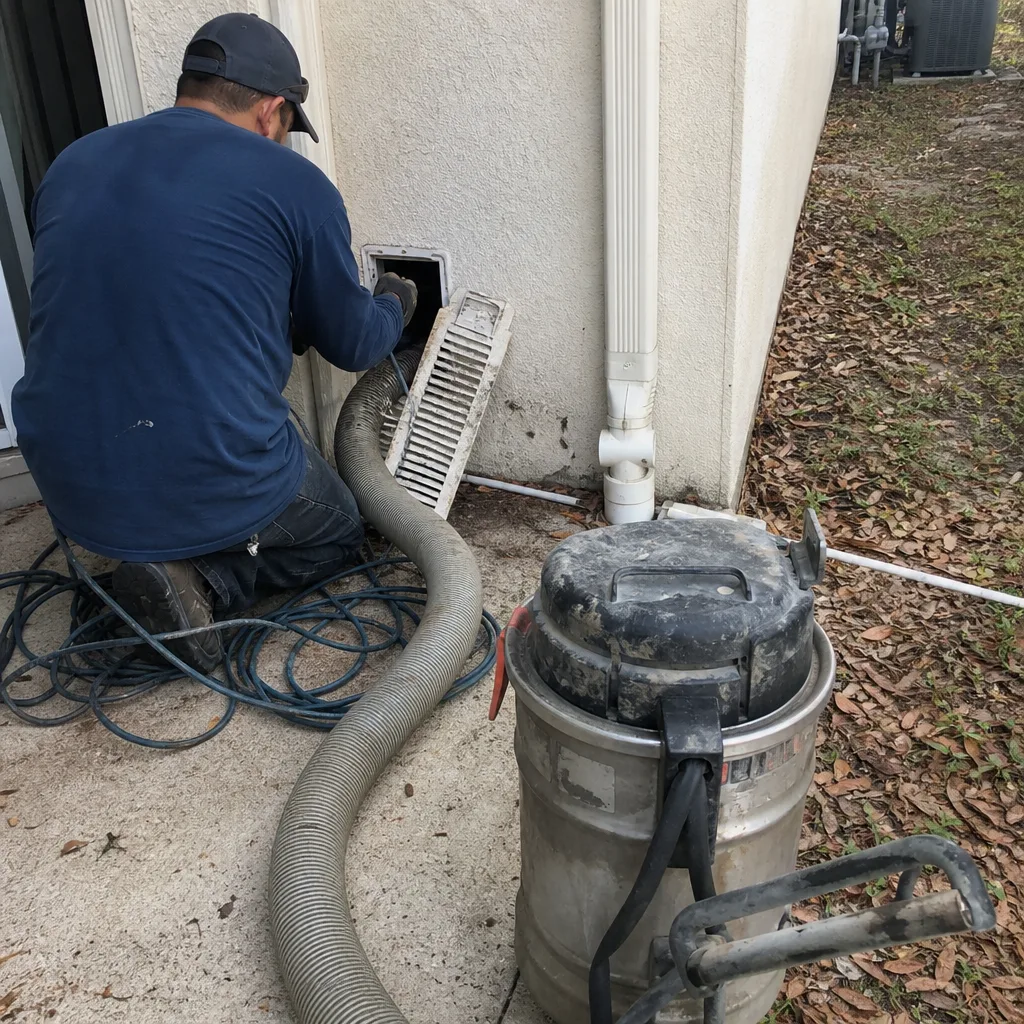 Before
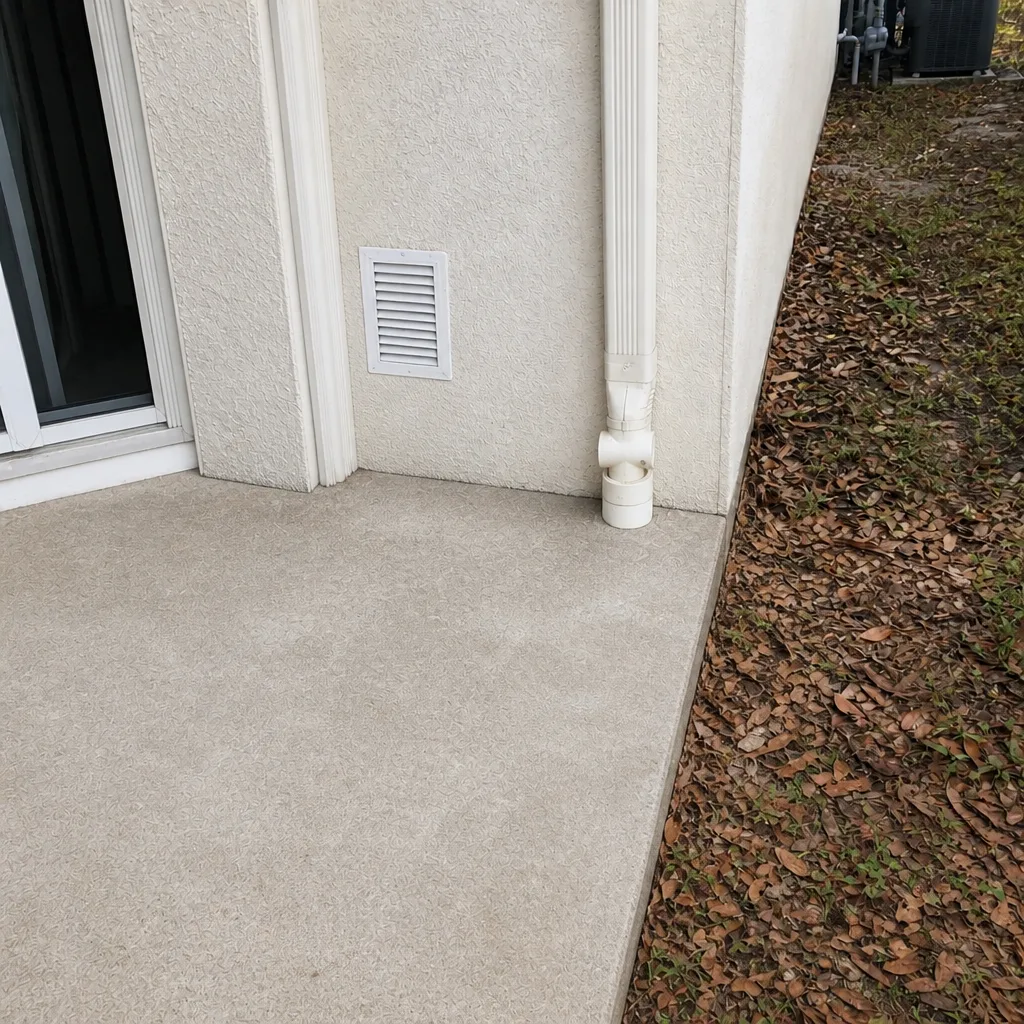 After
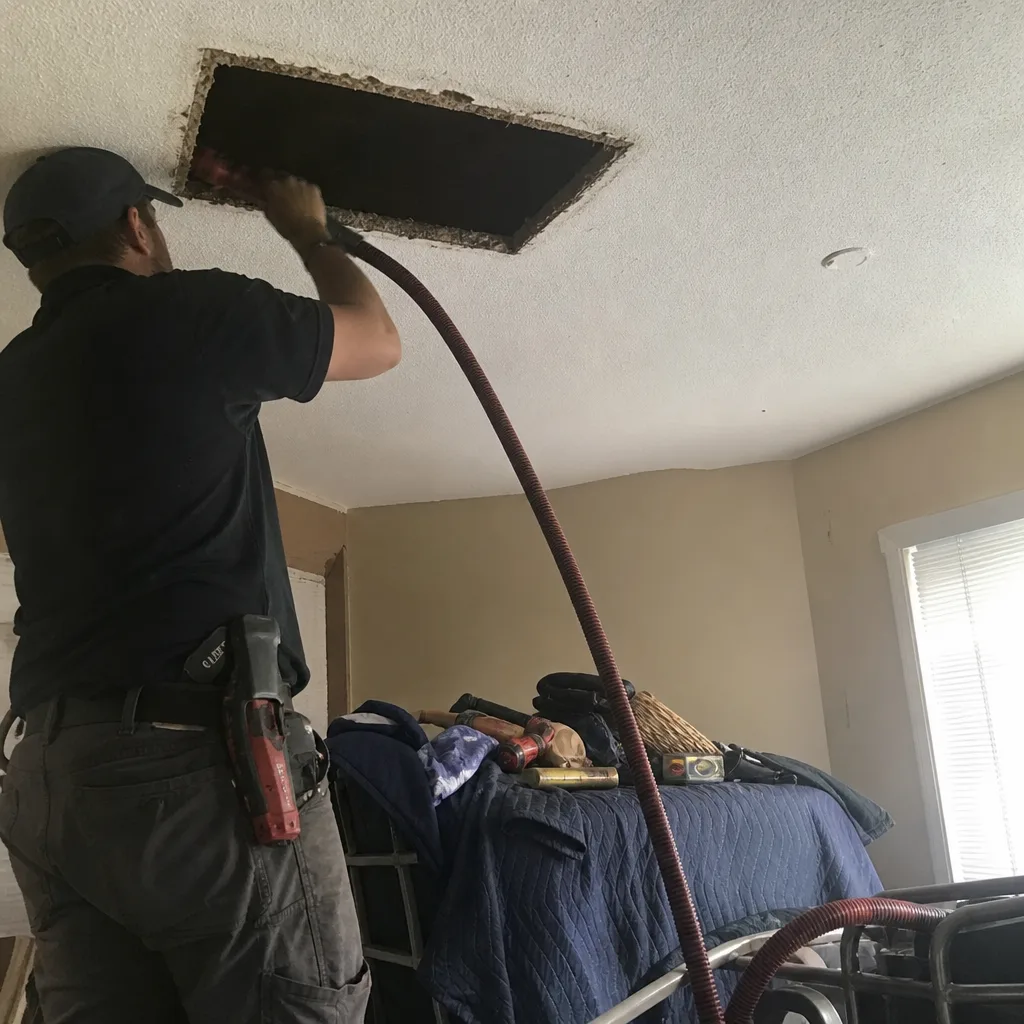 Before
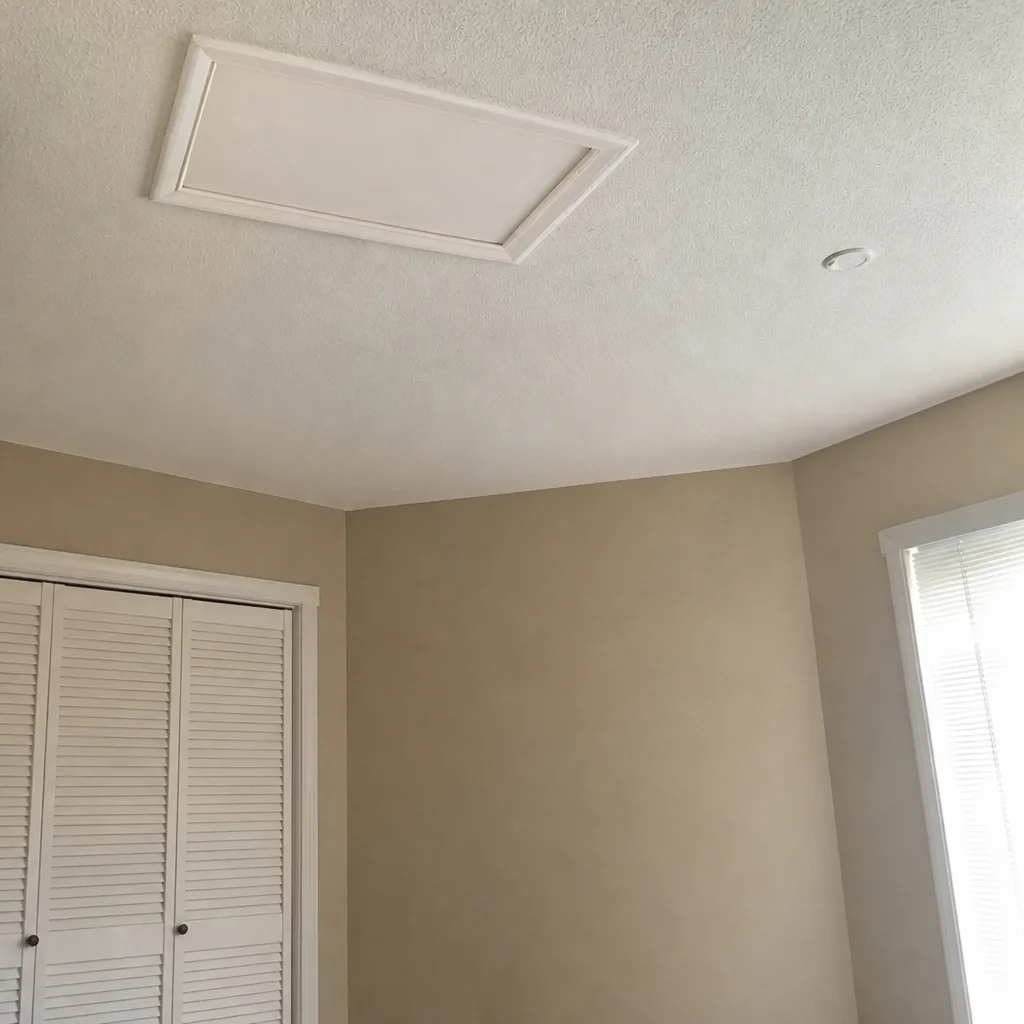 After
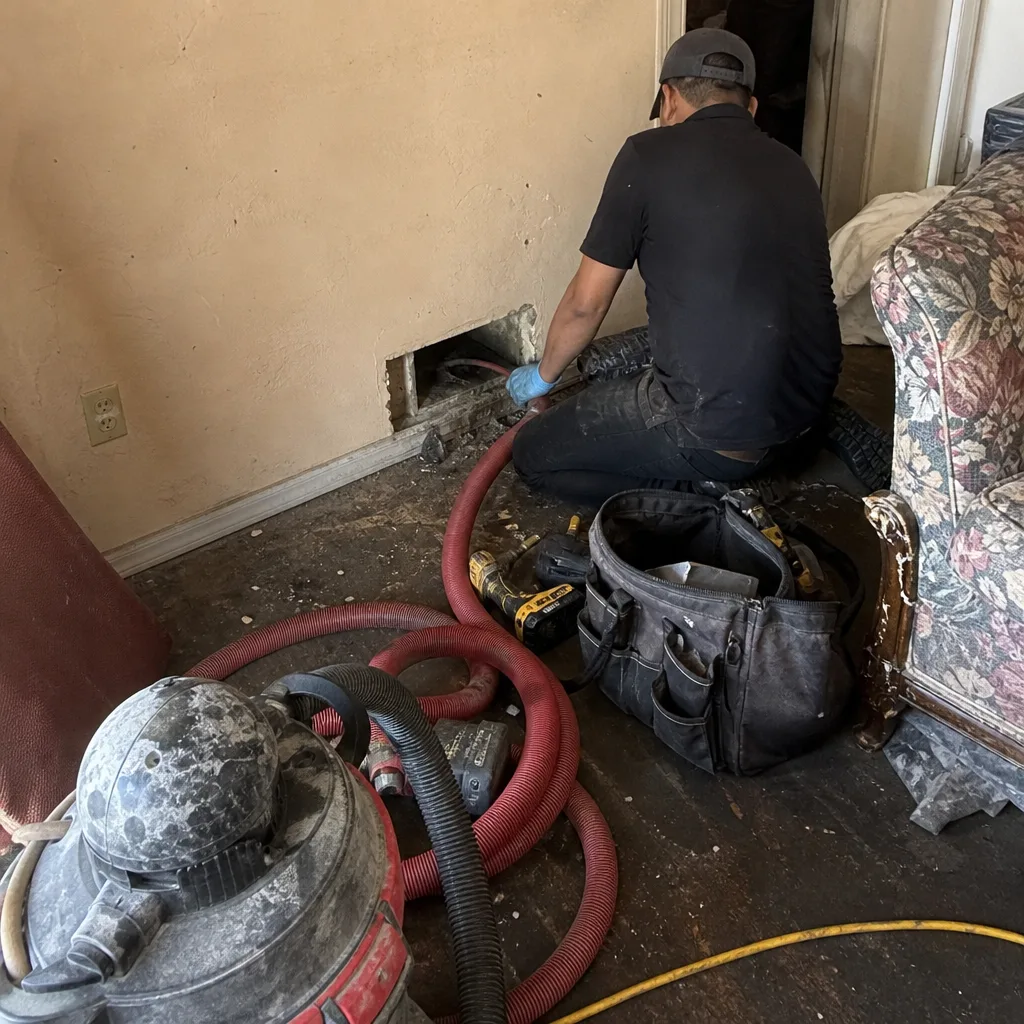 Before
 After
When to Call a Professional
Some seasonal maintenance is yours to handle: filter changes, return grille cleaning, and eyeballing accessible duct runs. But several situations call for a professional look, and waiting usually makes them worse. Call when you see condensation or moisture around your ducts during the wet season, when a smell persists after cleaning accessible areas, when a storm has passed and you’re unsure whether anything got in, when one part of the home never cools right, or when it’s simply been years since the system was serviced. The same goes if you’re dealing with allergy or asthma symptoms that spike when the AC runs.
Duct Cleaning Lehigh Acres offers free estimates in Lehigh Acres. We can work with your insurer where relevant, and we use professional-grade equipment, including Rotobrush and Nikro systems, not shop-vac shortcuts. Call (855) 554-4780 to schedule an estimate.
Frequently Asked Questions
Most Lehigh Acres homes do well with a cleaning every few years, timed to the transition between the wet and dry seasons rather than a fixed calendar date. Homes with pets, allergy or asthma sufferers, young children, or recent renovation work often need it sooner. The right interval depends on your specific system and how much particulate it collects. Call (855) 554-4780 for an exact quote and a recommendation, and remember the estimate sets the final price, not a guess.
Late March into early May, before the wet season, and late October into November, once the rains taper off and before dry-season pollen ramps up. Cleaning at those transition points clears the system before it faces its next stressor, which stretches the time between service calls. Booking mid-season works, but it doesn’t buy you as much time. Call (855) 554-4780 and we’ll help you find the right window for your home.
Look for water staining on duct surfaces, a musty smell when the AC starts, condensation on supply registers, and indoor humidity that stays high even with the system running. Those signs point to a moisture source that needs tracing. The answer isn’t a quick clean, it’s finding the source. Call (855) 554-4780 for an inspection, and we’ll tell you what we find before any work begins.
Yes. The rapid pressure swings that come with a severe storm can pull apart duct connections that were already marginal, and storm debris can find its way in through exterior vents. Nothing may look wrong inside the house until you notice a musty smell or uneven cooling. A professional inspection after a storm confirms whether the system is intact. Call (855) 554-4780 for a free estimate.
We price the whole system as one flat price, agreed before work starts, based on the system’s size, configuration, and condition. There’s no per-vent pricing and no teaser rate that grows once a technician is on site. You get an estimate up front, and the written estimate sets the final price. Call (855) 554-4780 for an exact quote. Estimates are free.
Low quotes usually reflect a smaller scope: a single pass with underpowered equipment, no containment, and no look at duct condition or repair needs. The price looks better until the invoice grows or the work doesn’t hold. We use professional-grade Rotobrush and Nikro systems with Abatement Technologies containment, so debris is captured, not recirculated. Call (855) 554-4780 to see what a full-system estimate looks like for your home.
The Bottom Line
Lehigh Acres duct care comes down to working with the local weather instead of against it. Clean and inspect before the wet season, watch for condensation and moisture through the rainy months, check the system after any storm, and manage pollen and dust through the dry season. Time your professional cleaning for the two transition points, and the work holds up longer. Handle dryer vent care on the same rhythm, and don’t ignore duct repair when the signs point to it. Our technicians have up to 8 years of experience, and we use professional equipment built for the job, because clean ducts start with the right system.
Call (855) 554-4780 for a free estimate on air duct cleaning, dryer vent cleaning, or duct repair in Lehigh Acres. We answer 24/7. Fast dispatch from 7am to 7pm, Sunday through Friday. Learn more at Duct Cleaning Lehigh Acres.
Written by the team at Duct Cleaning Lehigh Acres.